

Navigating Intel AMD server CPU deals in China requires a clear understanding of enterprise hardware pricing, performance options, and data center scalability.
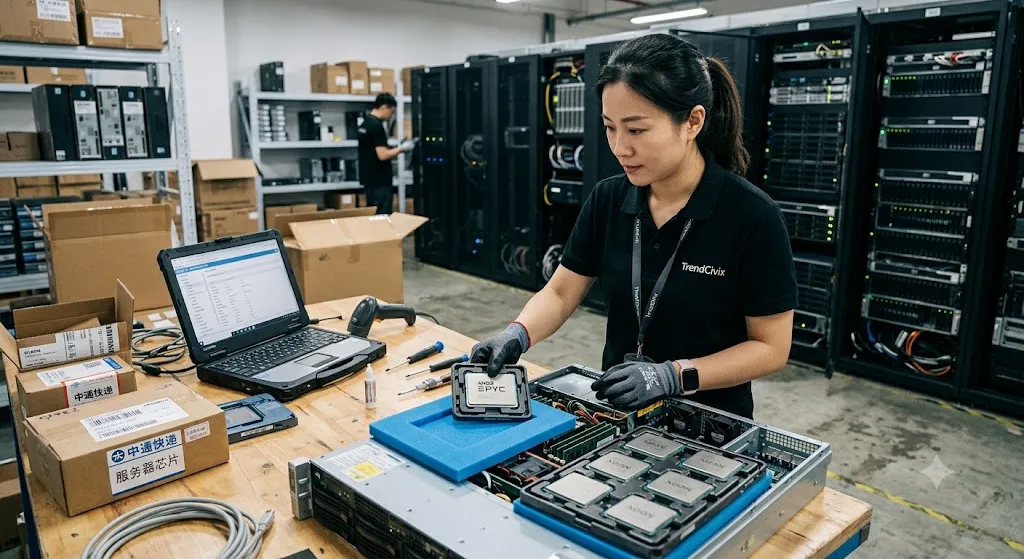
Whether you are optimizing a large-scale enterprise server infrastructure or balancing IT budgets against growing workload demands, securing the right server processors at competitive prices directly impacts operational efficiency.
Quick Answer
Intel AMD server CPU deals in China offer enterprise buyers high-performance data center processors at strategic price points. Driven by fierce competition between Intel Xeon and AMD EPYC architectures, these deals allow organizations to optimize cloud infrastructure, AI processing, and enterprise workloads cost-effectively while balancing regional availability and tech requirements.
What Are Intel AMD Server CPU Deals in China?
Intel AMD server CPU deals in China refer to the competitive market pricing, volume procurement incentives, and strategic channel offerings for server-grade microprocessors across the Chinese enterprise hardware market. These deals primarily involve Intel’s Xeon Scalable family and AMD’s EPYC processor lineup.
In modern enterprise computing, the central processing unit (CPU) serves as the engine for cloud environments, database management, high-performance computing (HPC), and artificial intelligence workloads. Because China represents one of the largest data center and cloud service markets globally, vendor pricing strategies and channel promotions frequently adapt to meet intense domestic demand.
Why Intel AMD Server CPU Deals in China Matter
Understanding the dynamics behind Intel AMD server CPU deals in China is essential for IT directors, hardware procurement managers, and system integrators.
Here is why this market dynamic demands attention:
- Cost Efficiency: Server processors represent a significant portion of hardware capital expenditure (CapEx). Finding regional deals allows businesses to reduce infrastructure expenses.
- Performance-Per-Watt Metrics: Comparing Intel and AMD server platforms helps enterprises choose processors that maximize computing power while keeping energy and cooling costs low.
- Market Competition: Strong competition between Intel and AMD leads to aggressive channel discounts, giving enterprise buyers greater leverage during contract negotiations.
- Workload Optimization: Different architecture designs favor distinct tasks. Having access to discounted inventory from both manufacturers allows organizations to match the right CPU to specific software workloads.
If your enterprise relies on robust IT infrastructure solutions, staying updated on global tech developments and investment strategies—such as ServiceNow’s $40 Million Investment in Indian Banking—provides valuable context on how enterprise technology adoption is accelerating across regional markets.
Key Benefits of Securing Server CPU Deals
Tapping into structured enterprise procurement programs for server hardware yields long-term operational advantages:
- Lower Total Cost of Ownership (TCO): Reduced initial processor pricing directly lowers the overall cost of deploying and maintaining data center racks.
- Scalable Data Center Infrastructure: Lower chip costs allow cloud providers and enterprises to deploy additional server nodes within the same capital budget.
- Access to Advanced Compute Capabilities: Promotional pricing often extends to mid-to-high-tier CPUs, giving buyers access to higher core counts, PCI Express lanes, and expanded memory bandwidth.
- Balanced Ecosystem Compatibility: Both Intel x86 and AMD x86 ecosystems support enterprise operating systems, virtualization stacks, and containerized software natively.
How It Works: Evaluating Server CPU Procurement Options
When evaluating Intel and AMD server CPU deals in China, following a structured step-by-step approach ensures you select the right processor architecture without compromising reliability.
Step 1: Define Workload Requirements (Cores, Clock Speed, Memory)
│
▼
Step 2: Evaluate Platform Compatibility (Intel x86 vs. AMD x86)
│
▼
Step 3: Compare Total Cost of Ownership (CapEx + Power/Cooling)
│
▼
Step 4: Verify Authorized Vendor & Channel Warranty Standards
Step 1: Define Workload Requirements
Determine whether your application prioritizes high single-core clock speeds (ideal for relational databases) or massive multi-core parallelism (ideal for virtualization, cloud hosting, and multi-tenant applications).
Step 2: Compare Platform Architectures
Evaluate the platform specifications:
- Intel Xeon: Known for robust instruction sets like AVX-512 and integrated accelerator engines tailored for specific AI and cryptographic tasks.
- AMD EPYC: Known for high core density per socket, extensive PCIe lane capacity, and strong multi-threaded efficiency.
Step 3: Analyze Energy and Thermal Efficiency
Calculate long-term operational expenses (OpEx). A server CPU deal with a lower upfront cost may lose value if its thermal design power (TDP) results in significantly higher energy bills over a three-to-five-year deployment lifecycle.
Step 4: Verify Authorized Supply Channels
Ensure hardware procurement occurs through official distributor channels or authorized server OEM partners to maintain manufacturer warranty coverage and firmware update support.
Best Practices and Expert Tips for Buyers
Navigating server processor procurement requires strategic planning. Keep these expert tips in mind:
- Focus on Total Cost of Ownership, Not Just CPU Price: Factor in motherboards, memory channels, thermal requirements, and power supply specs required by each platform.
- Leverage OEM Server Bundles: Often, the best hardware savings come integrated within complete server configurations from major OEMs rather than standalone CPU purchases.
- Plan for Thermal Management: High-core-count processors generate substantial thermal output. Ensure your rack cooling setup matches the thermal output of the chosen processor model.
- Audit Workload Software Licensing: Many enterprise software suites charge per CPU core. Selecting a chip with fewer, faster cores can sometimes save thousands in software license fees compared to high-core-count processors.
Common Mistakes to Avoid
Even experienced IT teams can encounter pitfalls when pursuing Intel and AMD server CPU deals in China. Here are frequent errors to watch out for:
- Overlooking Generation Differences: Older generation CPUs may carry heavy discounts, but they often lack modern PCIe capabilities, DDR5 memory support, and energy efficiency gains found in current-generation platforms.
- Ignoring Platform Lifecycle: Purchasing end-of-life (EOL) architectures can complicate future node expansions and replacement parts sourcing.
- Focusing Solely on Core Counts: High core counts do not guarantee superior performance if your primary software cannot effectively utilize parallel processing threads.
- Bypassing Authorized Warranties: Sourcing grey-market components to save costs carries risks of voided warranties, counterfeit products, or chips lacking critical firmware patches.
Future Trends in the Server Hardware Market
The server processor landscape continues to evolve rapidly. Here is what enterprise buyers should watch for in upcoming procurement cycles:
- AI-Accelerated Processing: Future server chips from both Intel and AMD will increasingly integrate dedicated neural processing blocks to handle AI inference directly on the CPU.
- Increased Core Density: Processors continue to push core counts higher within standard socket envelopes, driving greater virtualization density per server rack.
- Custom Silicon Coexistence: While x86 chips remain dominant, ARM-based custom server silicon and specialized accelerators will continue to drive competitive pricing across x86 server market segments.
- Focus on Power Management: Energy costs continue to rise globally, pushing processor manufacturers to design more aggressive power-capping features and energy-efficient execution cores.
Final Thoughts
Maximizing value from Intel AMD server CPU deals in China requires balancing upfront acquisition costs against workload performance, power efficiency, and platform longevity. By assessing core counts, software licensing requirements, and platform ecosystems, organizations can build scalable, cost-effective infrastructure capable of supporting modern workloads.
Looking to optimize your IT infrastructure or stay updated on global business and technology trends? Explore more insights on TrendCivix across our technology, AI, and business categories. For media inquiries, partnership opportunities, or technical feedback, feel free to visit our Contact Us page to get in touch with our team.
FAQs
What are Intel AMD server CPU deals in China?
Intel AMD server CPU deals in China are channel-specific pricing offers, volume procurement incentives, and server processor promotions for Intel Xeon and AMD EPYC enterprise chips across Chinese data center markets.
Which processor is better for enterprise servers: Intel Xeon or AMD EPYC?
The choice depends on workload requirements. AMD EPYC often provides higher core density and extensive PCIe connectivity per socket, while Intel Xeon offers specialized hardware acceleration engines for specific AI and data analytical workloads.
How do server CPU deals lower data center operating costs?
Securing discounted server processors reduces capital expenditure during initial setup, allowing data centers to allocate budget toward higher-grade memory, fast storage, or power-efficient infrastructure.
Should I choose older generation server CPUs if they are heavily discounted?
Older generation chips can be suitable for non-critical environments or secondary backup servers. However, current-generation processors usually provide superior power efficiency, modern PCIe standards, and longer vendor support lifecycles.
How can businesses verify authentic server CPU deals?
Businesses should procure hardware directly through authorized original equipment manufacturers (OEMs), verified distributors, or certified server integrators to ensure genuine warranty coverage and system support.