
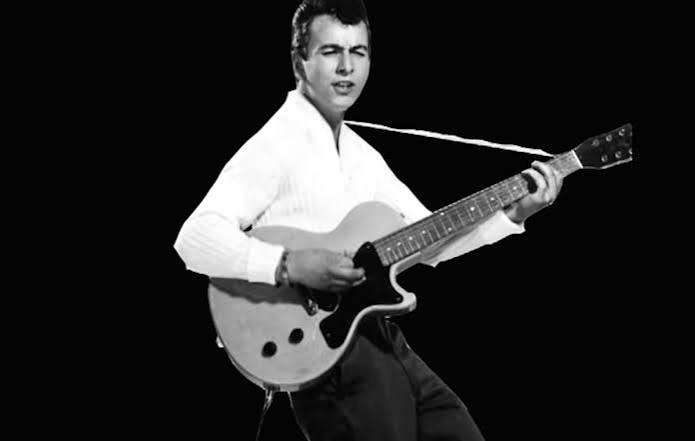

Vernon Taylor, a pioneering country and rockabilly musician whose recording career connected him with the legendary Sun Records and Dot Records, has died at the age of 88. Taylor passed away on July 12, 2026, following a long battle with dementia. His death came just one day after the passing of his brother, Luther Taylor, who had also reportedly been living with dementia.

The deaths of the two brothers within such a short period have added a deeply emotional chapter to the story of a musician remembered for his contribution to the early years of rockabilly music. Although Vernon Taylor never achieved the same level of mainstream fame as some of the biggest artists associated with Sun Records, his music, determination, and later career revival helped preserve his place in American roots music history.
Raised in a Baptist Farming Family
Vernon Taylor was born Walton Alderton on November 9, 1937. He was the youngest of four children and was raised in a Baptist farming family. His early life was shaped by faith, rural traditions, family responsibilities, and the country and hillbilly music he heard while growing up.
When Taylor was around 11 years old, his family moved to Spencerville, Maryland. It was during this period that he began learning to play the guitar. His rural upbringing and exposure to traditional country music became important influences on the sound he would later develop.
Taylor grew up listening to country performers and early American roots music. Like many young musicians of his generation, he was inspired by the changing musical landscape of the 1950s, when country, blues, rhythm and blues, and early rock and roll began blending into the energetic sound that became known as rockabilly.
Formation of The Nighthawks
Taylor began pursuing music seriously while still a teenager. At the age of 15, he formed a band called The Nighthawks with two of his high school classmates. The group later expanded into a five-piece band and began performing around the region.
One of the band’s first important opportunities came when country performer Curley Smith visited the area. Taylor approached Smith and asked whether The Nighthawks could perform between his sets.
The young band reportedly received such a positive response that it gained further opportunities to work with Smith. This early exposure gave Taylor and his bandmates valuable experience performing in front of live audiences.
The Nighthawks later appeared on a Saturday night television program broadcast by WTTG in Washington, D.C. The group remained associated with the program from 1957 until 1960, giving Taylor regular exposure during a period when television was becoming an increasingly powerful platform for musicians.
These television appearances helped establish Taylor as a promising young country and rockabilly performer.
Early Recordings With Dot Records
Taylor’s growing profile eventually led to a recording agreement with Dot Records in 1957. During his time with the label, he released songs including “Losing Game,” “I’ve Got the Blues,” “Why Must You Leave Me,” and “Satisfaction Guaranteed.”
Although the recordings demonstrated Taylor’s ability as a singer and rockabilly performer, they did not achieve major commercial success. Dot Records ultimately ended its relationship with him after the singles failed to generate the expected sales.
For many young musicians, losing a record deal might have ended their recording ambitions. However, Taylor soon received another major opportunity.
Discovered by Sun Records Founder Sam Phillips
Taylor’s performance on the popular television program American Bandstand reportedly attracted the attention of Sam Phillips, the influential founder of Sun Records. Phillips had already played a major role in launching or recording artists who helped shape early rock and roll, country, blues, and rockabilly.
Taylor signed with Sun Records and entered the studio on October 27, 1958, to record “Today Is a Blue Day” and “Breeze.” The recordings were released as a Sun single, placing Taylor among the musicians connected with one of the most historically significant record labels in American popular music.
A second Sun release followed in 1959, featuring “Mystery Train” and “Sweet and Easy Love.” Taylor also recorded other material for the label, though some of the songs remained unreleased during that period.
Despite the prestige associated with Sun Records, Taylor’s singles did not become major commercial hits. The lack of chart success eventually led him to step away from professional music.
Leaving Music for Family and Business
After his early recording career failed to produce a breakthrough hit, Taylor made the decision to focus on his family and business career. His departure from music reflected the practical realities faced by many talented performers during the early rock and roll era.
Not every artist associated with an important record label achieved national fame. Many musicians recorded influential or collectible songs but were unable to build sustainable careers because of limited promotion, changing musical tastes, financial pressures, or family obligations.
Taylor spent several decades away from the recording industry. However, interest in early rockabilly music continued to grow among collectors, historians, musicians, and fans, particularly in Europe.
A Successful Musical Comeback
Taylor returned to performing in 1989 when he participated in a benefit concert for fellow rockabilly musician Charlie Feathers. The event helped reignite interest in Taylor’s music and opened the door to an unexpected comeback.
He later performed internationally, including appearances in the United Kingdom. His early recordings for Sun Records and Dot Records were also reissued, allowing a new generation of listeners to discover his work.
In 1999, Taylor released Daddy’s Rockin’, an album containing newly recorded material. The project demonstrated that his voice, personality, and connection to traditional rockabilly remained strong many years after his original recordings.
Taylor’s comeback was significant because it allowed him to receive recognition that had largely escaped him during the 1950s. While his early singles had not become major hits, they gained historical value as interest in original rockabilly recordings increased.
Remembering Vernon Taylor’s Legacy
Vernon Taylor’s career represents the story of many important musicians who helped create the sound of early rock and roll without becoming household names.
His work with The Nighthawks, Dot Records, and Sun Records placed him within the formative years of rockabilly. His recordings captured the energy of a musical era that combined country storytelling, rhythm and blues influences, lively guitar work, and youthful rebellion.
Taylor is also remembered as a performer who returned to music after decades away and found an appreciative audience later in life. His revival proved that meaningful music can survive beyond its original commercial performance.
Tributes following his death described him as one of the remaining artists connected to Sun Records and remembered him as a kind, talented, and respected performer.
The timing of his death, just one day after his brother Luther, has made the family’s loss especially heartbreaking. The brothers reportedly remained close throughout their lives and faced similar health struggles in their later years.
Vernon Taylor leaves behind a musical legacy rooted in faith, family, rural America, and the early development of rockabilly. His recordings continue to preserve the sound of a transformative period in American music history.
Although he never became one of the biggest stars of the genre, his contribution remains meaningful. From a Baptist farming family to television performances, record deals, international shows, and a late-career revival, Vernon Taylor’s life reflected determination, humility, and a lasting love for music.