

The global semiconductor ecosystem is experiencing a massive shift, and China memory chip makers are right at the center of this transformation. As demand for high-performance storage expands from consumer electronics to enterprise artificial intelligence servers, domestic memory producers are rapidly accelerating their output and technological capabilities.
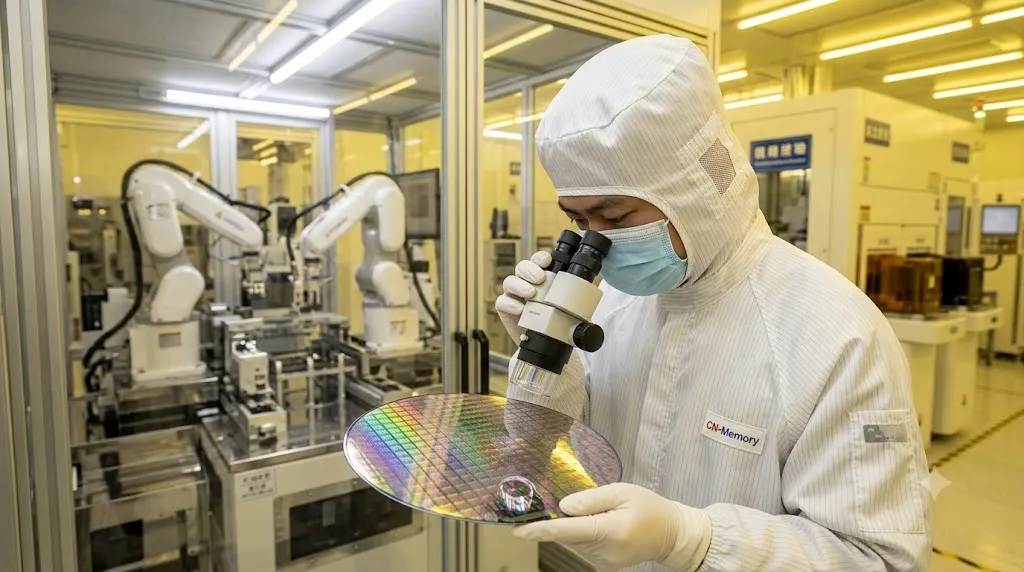
Understanding this expansion is essential for anyone tracking hardware supply chains, IT procurement, or international tech markets.
Quick Answer
China memory chip makers-led by key manufacturers like YMTC (NAND flash) and CXMT (DRAM)-are domestic semiconductor companies focused on designing and producing memory chips. They play a crucial role in reducing global supply chain reliance, driving local hardware innovation, and providing cost-effective memory solutions across consumer and enterprise markets.
What Are China Memory Chip Makers?
Memory chips are the fundamental building blocks of modern computing. They allow devices to store data temporarily (DRAM) or permanently (NAND Flash). For years, the global market was dominated by a handful of established giant firms. However, domestic production initiatives have given rise to competitive manufacturers within China.
These specialized chip makers focus primarily on two key technologies:
- DRAM (Dynamic Random-Access Memory): Used for real-time system memory in smartphones, PCs, and data center servers.
- NAND Flash Storage: Non-volatile memory used in Solid-State Drives (SSDs), memory cards, and embedded storage solutions.
By advancing local fabrication capabilities, these manufacturers aim to fulfill local tech demand while expanding their footprint in international supply chains.
Why China Memory Chip Makers Matter Today
The rise of domestic memory production carries major implications for tech manufacturers, hardware enthusiasts, and enterprise procurement teams alike.
+———————————————————————–+
| Impact of Domestic Memory Expansion |
+————————————+———————————-+
| Market Diversification | Offers alternative components |
| | for global supply chains. |
+————————————+———————————-+
| Cost Optimization | Drives competitive pricing across |
| | storage and RAM markets. |
+————————————+———————————-+
| Hardware Integration | Complements server chips like |
| | Intel and AMD processors. |
+————————————+———————————-+
First, supply chain resilience has become a top priority for tech organizations worldwide. Having additional memory suppliers balances market availability during unexpected global shortages. Second, increased production creates cost competition, making high-capacity storage and memory solutions more accessible for everyday consumers and enterprise data centers.
Furthermore, memory technology operates side-by-side with processor architecture. As server infrastructures grow, memory chips must scale seamlessly alongside high-end computing components—a trend clearly reflected in our analysis of Intel & AMD Server CPU Deals in China.
Key Benefits of the Growing Domestic Memory Market
The expansion of memory manufacturing brings clear advantages to the tech ecosystem:
- Greater Supply Chain Availability: Additional production lines help cushion the global market against regional supply bottlenecks.
- Competitive Market Pricing: Increased competition naturally prevents price spikes on consumer SSDs, RAM modules, and enterprise storage arrays.
- Rapid Architectural Iteration: Focused research and development accelerates time-to-market for high-density 3D NAND and advanced DRAM designs.
- Localized Innovation Ecosystems: Proximity to major consumer electronics assembly hubs streamlines device manufacturing and testing cycles.
How It Works: The Memory Chip Production Process
Building modern memory chips is one of the most complex engineering feats on the planet. Here is a simplified breakdown of how modern memory facilities operate:
- Silicon Wafer Preparation: Pure silicon is formed into ultra-thin circular wafers that serve as the base layer.
- Photolithography & Etching: Microscopic circuit patterns are transferred onto the wafer using advanced light exposure equipment.
- 3D Layer Stacking (NAND): For storage chips, memory cells are stacked vertically in hundreds of layers to increase capacity without enlarging the chip size.
- DRAM Architecture Fabrication: Capacitors and transistors are precisely patterned to create high-speed volatile storage.
- Testing and Packaging: Wafers are sliced into individual dies, rigorously stress-tested, and packaged for final deployment into SSDs or memory sticks.
Best Practices and Expert Advice for Tech Buyers
Whether you are building a custom PC, upgrading corporate servers, or sourcing components for hardware production, keep these practical guidelines in mind:
- Verify Controller and Memory Compatibility: Ensure the memory controller on your motherboard or server board supports the specific DRAM generation (e.g., DDR4 vs. DDR5).
- Check Warranty and Endurance Ratings: Look at Total Bytes Written (TBW) metrics when evaluating storage drives to ensure long-term reliability under heavy workloads.
- Diversify Sourcing Channels: Hardware procurement teams should maintain relationships with multiple component vendors to mitigate regional stock shortages.
- Monitor Firmware Updates: Regularly update storage drive firmware to ensure optimal performance, heat management, and data integrity.
Common Mistakes to Avoid
Navigating hardware purchasing can be tricky. Here are frequent pitfalls to steer clear of:
- Assuming All Memory Chips Performance Is Identical: Read and write speeds vary widely based on architecture, density, and interface types (e.g., PCIe 4.0 vs. PCIe 5.0).
- Ignoring Heat Dissipation Requirements: High-density 3D NAND and fast DRAM generate significant heat; always ensure proper heatsinks and airflow in your builds.
- Overlooking Form Factor Standards: Always double-check dimensional clearance, especially when installing M.2 SSDs in compact laptops or server blades.
Future Trends: What to Expect in Memory Technology
Looking ahead, memory manufacturing is set to enter an exciting phase defined by speed and density:
- Higher Layer Counts in 3D NAND: Manufacturers are pushing beyond 200+ layer architectures to deliver multi-terabyte drives in tiny form factors.
- Widespread DDR5 Adoption: High-bandwidth DDR5 memory will continue replacing older DDR4 standards across both consumer platforms and cloud data centers.
- AI-Driven Storage Demand: Generative AI models require massive datasets, driving unprecedented demand for fast High Bandwidth Memory (HBM) and ultra-speed enterprise SSDs.
Final Thoughts
The rapid growth of China’s memory chip makers marks a pivotal chapter in global technology development. By offering scalable alternatives, driving pricing efficiency, and supporting next-generation hardware demands, domestic manufacturers are strengthening their position across the semiconductor space.
As memory standards evolve, staying informed on hardware developments helps businesses and consumers make smarter tech investments. Have questions about tech components, hardware sourcing, or digital trends? Feel free to reach out directly through our Contact Us page, or explore our latest technology coverage on TrendCivix to stay ahead of the curve!
FAQs
What are the main types of memory chips produced in China?
The primary types are DRAM (Dynamic Random-Access Memory), used for high-speed system memory, and NAND Flash, used for long-term storage solutions like SSDs and smartphone storage.
How do domestic memory chips impact consumer electronics pricing?
Increased production adds more component supply to the global market. Higher competition generally helps stabilize component prices, making SSDs and system memory more affordable.
Are domestic memory chips compatible with global hardware standards?
Yes, memory producers design chips to meet universal JEDEC and NVMe specifications, ensuring compatibility with standard processors, motherboards, and operating systems worldwide.
Why is 3D NAND technology significant for memory makers?
3D NAND allows manufacturers to stack memory cells vertically rather than horizontally. This significantly increases storage capacity per square millimeter without requiring smaller silicon transistor nodes.
What industries rely most heavily on advanced memory chips?
Key industries include consumer electronics (smartphones and PCs), automotive technology, cloud data centers, enterprise networking, and artificial intelligence infrastructure.