
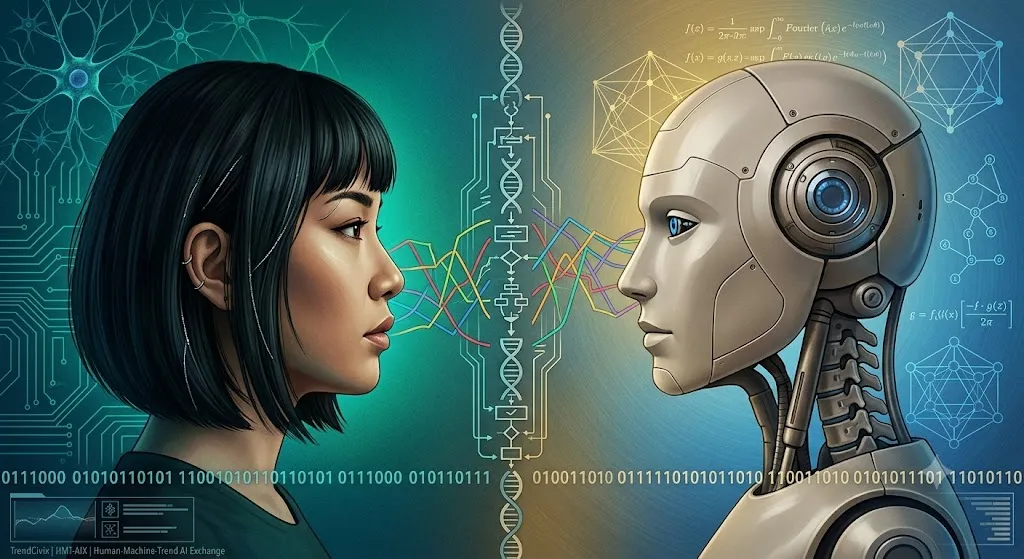

Will AI replace humans or help them is the defining question of our generation, reshaping how we think about work, creativity, and progress. As artificial intelligence advances into robotics and cognitive tasks, anxiety around total automation grows.
However, the reality is far more hopeful: AI is designed not to eliminate human agency, but to amplify human potential through powerful collaboration.
Quick Answer
AI is far more likely to help humans than completely replace them. While artificial intelligence automates repetitive tasks and optimizes data processing, it lacks emotional intelligence, ethical judgment, and deep creativity. Rather than eliminating human roles, AI transforms them-shifting us toward collaborative, higher-level problem-solving and innovation.
What Is the AI Replacement vs. Assistance Debate?
The debate over whether AI will replace or assist humans centers on automation versus augmentation. Automation happens when machines completely take over tasks previously done by people. Augmentation, on the other hand, occurs when technology provides tools that enhance what a human can achieve.
To understand where technology is headed, consider recent milestones in hardware and software integration. For example, modern robotics developments—like Anthropic’s investment in Physical Intelligence—show how AI is moving beyond computer screens to assist with real-world physical tasks. Understanding these shifts helps us prepare for a workplace where software and hardware seamlessly support human effort.
AI AUGMENTATION MODEL
+———————————+
| HUMAN INTENT |
| (Creativity, Vision, Ethics) |
+—————-+—————-+
|
v
+—————-+—————-+
| AI SYSTEM |
| (Speed, Scale, Data Processing) |
+—————-+—————-+
|
v
+—————-+—————-+
| OPTIMIZED OUTCOME |
| (Higher Quality & Efficiency) |
+———————————+
Why the Question “Will AI Replace Humans or Help Them” Matters Right Now
Understanding this dynamic isn’t just an academic exercise; it directly affects career planning, business strategy, and educational choices. Here is why this distinction is critical today:
- Workplace Evolution: Careers are shifting rapidly from execution-heavy tasks to strategic oversight.
- Economic Impact: Businesses that leverage AI as a tool grow faster, creating new specialized job markets.
- Skill Adaptation: Knowing what AI can’t do helps workers focus on irreplaceable human skills like empathy, negotiation, and critical thinking.
Key Benefits of Human-AI Collaboration
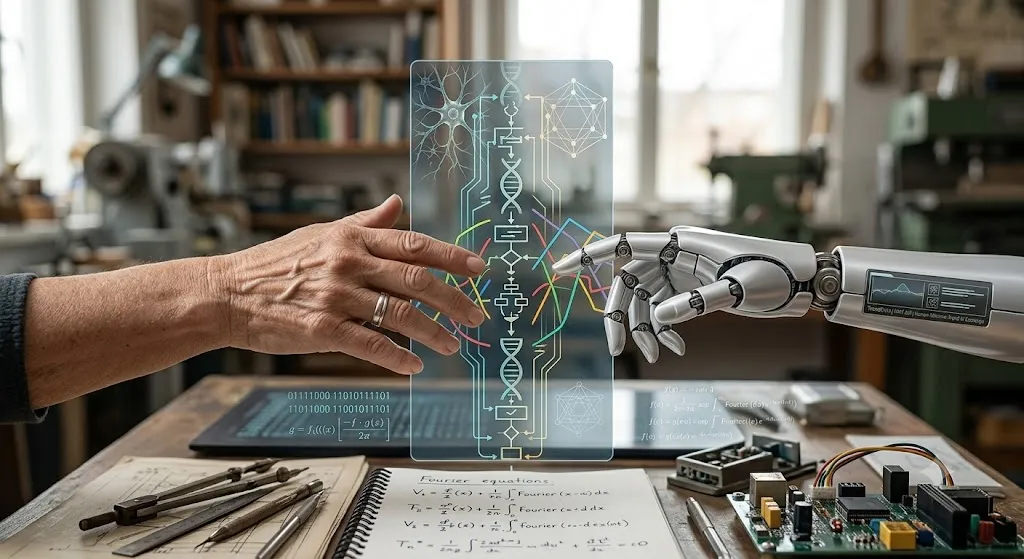
When humans and artificial intelligence work together, the results consistently outperform either working alone.
- Massive Productivity Gains: AI processes thousands of data points in seconds, allowing humans to focus on strategy and decisions.
- Reduction of Routine Burnout: Automating monotonous tasks like data entry or scheduling leaves more time for meaningful work.
- Enhanced Creativity: AI tools generate ideas, draft outlines, and build prototypes, serving as a dynamic creative sounding board.
- Precision and Error Reduction: In fields like healthcare, AI assists doctors by spotting patterns in medical imagery faster, improving diagnostic accuracy.
How AI Helps Humans Across Different Industries
To see practical human-AI partnership in action, consider how various sectors use technology as an assistant rather than a replacement:
1. Healthcare
AI analyzes scans and lab results to highlight anomalies, but doctors make the final diagnosis and deliver empathetic care to patients.
2. Content Creation and Publishing
Writers and editors use AI to generate research summaries, brainstorm angles, and refine SEO strategies, while maintaining the nuanced tone and human connection that readers trust.
3. Customer Service
Chatbots resolve simple, repetitive queries instantly, freeing up human representatives to solve complex, high-empathy customer issues.
4. Software Development
Engineers rely on AI tools to write boilerplate code and detect bugs, speeding up product launches while keeping human architecture design at the core.
Best Practices for Working Alongside AI
If you want to stay ahead in an AI-driven world, adopt these proven practices to boost your value:
- Focus on Prompt Engineering and Context: Learn to give AI clear, contextual instructions to get high-quality outputs.
- Double Down on Human Traits: Strengthen soft skills like emotional intelligence, leadership, ethical reasoning, and critical evaluation.
- Fact-Check and Verify: Never accept AI outputs on blind faith. Always review data, citations, and claims for accuracy.
- Adopt a Continuous Learning Mindset: Stay updated on new AI tools in your niche to keep your workflow fast and efficient.
Common Mistakes to Avoid When Using AI
- Over-Relying on Automation: Expecting AI to handle strategic decisions without oversight leads to errors and generic results.
- Fearing Technology Instead of Adapting: Resisting AI adoption entirely can leave professionals behind as workflows modernize.
- Ignoring Data Privacy and Ethics: Inputting sensitive personal or corporate information into unsecured AI systems poses serious risks.
Future Trends: What to Expect Next
Looking ahead, the line between technology and human execution will become even more integrated, but human oversight will remain essential.
| Trend | What It Means for Humans |
| Agentic AI Systems | AI will execute multi-step workflows autonomously, but humans will set goals and review results. |
| Embodied Physical AI | Advanced robotics will assist in manufacturing, logistics, and healthcare under human direction. |
| Hybrid Job Roles | New careers will center on AI oversight, ethical auditing, and human-tech integration. |
Final Thoughts
So, will AI replace humans or help them? History and current trends both point toward help. While artificial intelligence will certainly replace specific tasks and redefine existing roles, its greatest power lies in augmenting human capability. By embracing AI as a collaborative partner rather than a competitor, we unlock unprecedented levels of innovation and efficiency.
If you have questions about how emerging tech affects your industry or want to share your thoughts, feel free to contact us at TrendCivix. Explore our latest posts across technology, artificial intelligence, and digital trends to stay informed and ahead of the curve.
FAQs
Will AI completely replace human workers in the future?
No, AI will not completely replace human workers. While it automates repetitive tasks, human skills like emotional intelligence, strategic thinking, and complex problem-solving remain irreplaceable.
Which jobs are safest from AI replacement?
Jobs that rely heavily on empathy, physical dexterity in unpredictable environments, high-level leadership, creative direction, and complex trade skills are the safest from automation.
How does AI help humans in daily work?
AI assists by automating routine scheduling, analyzing large datasets, generating preliminary content drafts, catching errors, and speeding up repetitive research.
What is human-in-the-loop (HITL) AI?
Human-in-the-loop is an AI workflow model where artificial intelligence handles data processing and task execution, but human judgment is required to verify results and make final decisions.
Is AI taking away more jobs than it creates?
While AI displaces traditional repetitive roles, it simultaneously creates new demand for technology managers, prompt engineers, data ethicists, and AI integration specialists.