
The global race for artificial intelligence hardware just reached a fever pitch, and SK Hynix shares are sitting right at the absolute epicenter of this financial explosion. If you have been tracking the tech markets lately, you know that hardware bottlenecks are the biggest hurdle for next-generation software. While retail investors frequently focus entirely on graphics processing unit (GPU) designers like Nvidia, savvy market spectators understand that those fast processors are completely useless without ultra-fast memory to feed them data.
On July 10, 2026, South Korean semiconductor powerhouse SK Hynix made history by pricing its mega US initial public offering (IPO) on the Nasdaq, raising a staggering $26.5 billion. This monumental Wall Street debut represents one of the largest stock sales in global history, driven entirely by an insatiable enterprise demand for high-bandwidth memory (HBM) chips. In this deep dive, we will break down what is happening with SK Hynix stock, analyze their jaw-dropping financial performance, and outline the core risks and rewards for everyday investors looking to capitalize on this hardware supercycle.
Quick Answer
In 2026, SK Hynix shares are experiencing a historic surge, driven by a blockbuster $26.5 billion Nasdaq listing and absolute market dominance in HBM4 memory chips for AI data centers. With a historic 72% operating margin reported in early 2026, the company stands as a foundational pillar of the global artificial intelligence infrastructure.
What Are SK Hynix Shares?
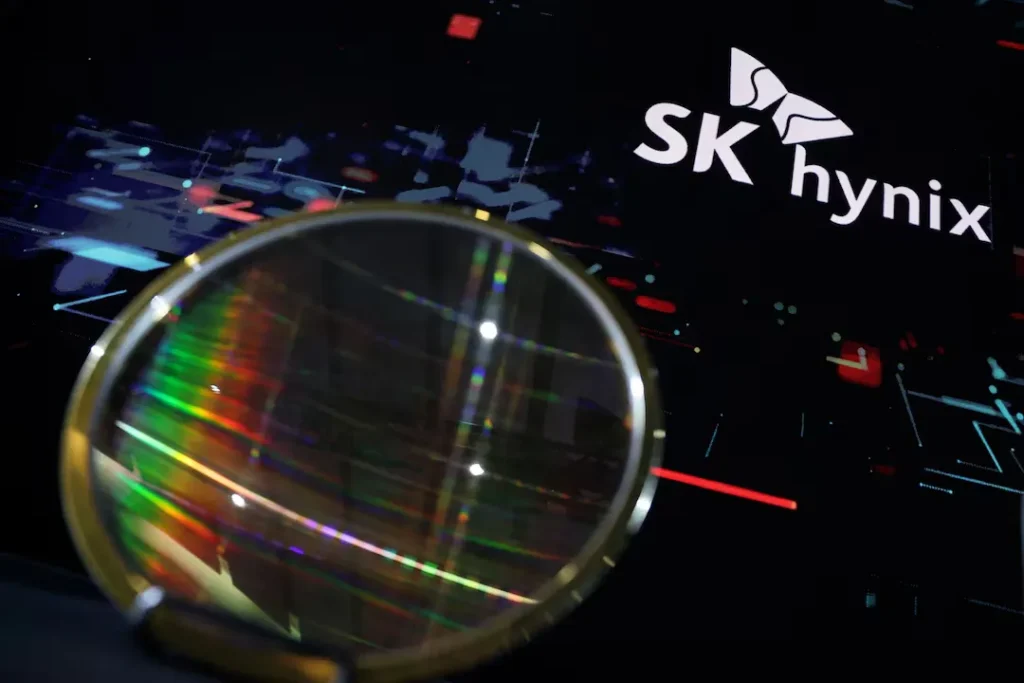
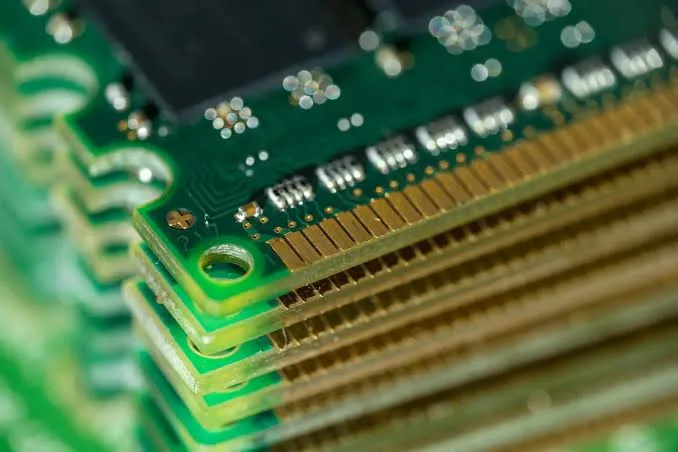
SK Hynix Inc. (traditionally traded on the Korea Exchange under KRX: 000660) is the world’s second-largest memory chipmaker and a critical upstream supplier to the tech industry. When you look at SK Hynix shares, you are looking at equity in the premier creator of High Bandwidth Memory (HBM)—a specialized class of DRAM that vertically stacks memory dies to achieve blindingly fast data transfer speeds.
+——————————————————-+
| SK HYNIX NASDAQ ADSs (2024) |
+——————————————————-+
| [ 1 normal share in Seoul ] = [ 10 Nasdaq ADSs ] |
| * Set at an initial public offering price of $149.00 |
+——————————————————-+
With its historic July 2026 US listing, American and international investors can now trade the company directly on the Nasdaq through American Depositary Shares (ADS), with each standard Seoul-listed share split into ten pieces priced initially at $149.00 per ADS. This move opens the floodgates for global retail and institutional capital to flow directly into the company.
Why SK Hynix Shares Matter to the Market
The semiconductor space has historically been notoriously cyclical—characterized by aggressive boom-and-bust supply gluts. However, the dawn of the “Agentic AI” era has completely disrupted this cycle. Memory is no longer just a passive storage component; it is the fundamental infrastructure layer that dictates how quickly a model can compute, reason, and infer answers in real time.
Furthermore, SK Hynix’s massive $26.5 billion Wall Street debut acts as a crucial litmus test for the entire tech sector. Coming on the heels of major manufacturing shifts—such as the rapid growth we covered in our previous analysis of India’s smartphone manufacturing ecosystem—this listing indicates that global tech capital is aggressively shifting toward localized, high-margin premium silicon production.
Key Benefits of Investing in SK Hynix
- Secured Backlog and Revenue Visibility: Unlike traditional memory businesses vulnerable to volatile spot market pricing, SK Hynix co-develops its custom HBM4 architectures directly with hyperscalers and top-tier GPU designers. This locks in long-term supply agreements months in advance.
- Unparalleled Profitability Margins: The pricing power commanded by specialized AI hardware is practically unprecedented.
- Diversified Play on the AI Supercycle: Investing in a core memory fabric provider allows you to gain broad exposure to the entire data center economy, mitigating the risk of betting on a single software application or individual chip architecture.
Understanding the Financial Engine: Q1 2026 Results
To understand why the Nasdaq listing was more than seven times oversubscribed, one only needs to look at the spectacular SK Hynix Q1 2026 results published earlier this year. The numbers highlight a company operating at maximum efficiency:
| Metric | Q1 2026 Financial Output (KRW) | Year-over-Year (YoY) Performance |
| Quarterly Revenue | 52.58 Trillion Won | +198% Increase |
| Operating Profit | 37.61 Trillion Won | Record-High Output |
| Operating Margin | 72% | Industry-Leading Profitability |
| Net Position | 35 Trillion Won Net Cash | Highly Liquid Balance Sheet |
This historic revenue leap occurred during a period that is traditionally a soft, seasonally slow quarter for hardware sales. The massive scale-up of corporate AI server installations completely wiped away the usual winter slump, allowing the firm to slash its interest-bearing debt while building a massive cash reserve.
Expert Strategy: How It Works for Investors

If you are looking to gain exposure to SK Hynix shares, navigating a dual-listed international giant requires a clean, structured approach. Here is how the investment process typically functions:
[ Step 1: Account Setup ] -> Choose a brokerage with access to Nasdaq ADSs.
[ Step 2: Currency Check ] -> Trade seamlessly in USD via American Depositary Shares.
[ Step 3: Monitor Supply ] -> Watch premium HBM4 allocations and enterprise contracts.
- Select the Right Asset Class: Choose between trading the primary stock on the domestic Korean KOSPI index or accessing the highly liquid, newly minted Nasdaq ADS units under their US ticker symbol.
- Track the Underlying Packaging Bottlenecks: The true metric of growth for SK Hynix isn’t just raw chip demand—it is packaging yield. Advanced packaging (stacking the micro-dies cleanly) is incredibly difficult to execute. High yields equal soaring stock values.
- Assess the Transition Beyond Training: Keep a close eye on the enterprise rollout of AI PCs and edge devices. As AI workloads shift from massive centralized training clusters to localized on-device inference, secondary product lines like LPDDR6 and enterprise solid-state drives (eSSDs) will generate massive secondary waves of revenue.
Best Practices and Expert Tips
- Dollar-Cost Average into Positions: Given that SK Hynix has soared over 220% on its native Seoul index through the first half of 2026, the stock is prone to sharp, fast pullbacks. Accumulating a position gradually over time shields you from short-term market corrections.
- Watch Samsung and Micron’s Product Yields: SK Hynix currently enjoys a first-mover advantage, but its primary competitors are investing billions to scale their own competing chip architectures. Monitor industry trackers like TrendForce to make sure SK Hynix maintains its leading market share.
- Diversify Your AI Portfolio Tech Basket: Do not let a single stock dominate your tech capital. Balance your hardware infrastructure holdings with exposure to software platforms, network routing hardware, and green energy providers powering the massive modern data grids.
Common Mistakes to Avoid
- Treating It Like a Legacy Commodity Producer: Investors who evaluate SK Hynix using ancient 2018 chip-cycle models will consistently miscalculate its earning power. Custom HBM logic behaves more like a high-margin proprietary software business than a simple bulk silicon provider.
- Ignoring Geopolitical Supply Line Policies: Semiconductor manufacturing remains a highly sensitive geopolitical focal point. Keep a close eye on cross-border export controls, trade tariffs, and regional manufacturing changes that could affect cross-border shipments.
- Chasing Short-Term Hype Waves: Buying aggressively at an absolute all-time high right after a major media announcement can expose you to sudden pullbacks when short-term traders take their profits.
Future Trends: What to Expect Next
Moving into the back half of 2026 and heading toward 2027, the primary catalyst to watch is the full commercial deployment of HBM4 memory chips. Featuring an ultra-wide 2,048-bit interface, this new configuration provides more than 2.5 times the data bandwidth of prior generations while slashing power consumption by roughly 40%.
Furthermore, expect the company to scale its ultra-dense 321-layer QLC enterprise storage lines through its Solidigm subsidiary. As global energy grids become strained under the sheer power load of massive computing farms, high-efficiency, ultra-dense storage configurations will emerge as the next vital sub-sector within the global semiconductor race.
Final Thoughts
The blockbuster US listing of SK Hynix marks a critical turning point in the technology markets, proving that the companies providing the physical foundations for computing hold massive leverage in the modern era. While high valuations always introduce short-term volatility, the company’s bulletproof balance sheet, 72% operating margins, and deep-tech packaging moats make it an essential focal point for anyone serious about tech investing.
Are you looking to expand your portfolio strategy or analyze how global tech shifts impact modern consumer markets? Take a moment to explore our comprehensive tech guides across TrendCivix. If you have specific enterprise inquiries, partnership proposals, or need dedicated digital content strategies, feel free to visit our TrendCivix Contact Page to get in touch with our editorial team today!
FAQs
Why did SK Hynix list its shares on the Nasdaq in 2026?
SK Hynix executed its massive $26.5 billion US listing to tap into global pools of capital, satisfy immense institutional demand, and fund the expansion of its high-tech packaging plants and production facilities like the Yongin cluster.
What is the difference between SK Hynix shares in Seoul vs. the US?
The US listings trade as American Depositary Shares (ADS) on the Nasdaq, where each individual ADS unit represents a fraction (one-tenth) of a regular domestic share traded on the South Korean KOSPI index.
Why is HBM4 memory so important for the stock’s valuation?
HBM4 is the premium standard for next-generation AI accelerators. Because it offers massive data bandwidth and a 40% improvement in energy efficiency, it commands incredibly high pricing premiums and drives record-shattering corporate margins.
What were the key takeaways from the SK Hynix Q1 2026 results?
The company pulled in a record 52.58 trillion KRW in quarterly revenue, expanding 198% year-over-year. More importantly, it achieved a historic 72% operating margin, highlighting extreme profitability fueled by institutional infrastructure spend.
Is investing in AI memory stocks risky?
Yes. Despite exceptional near-term growth, the semiconductor space remains fundamentally cyclical. Potential risks include evolving global export regulations, sudden shifts in corporate capital spending budgets, and competitive capacity scaling from rival chip producers.