
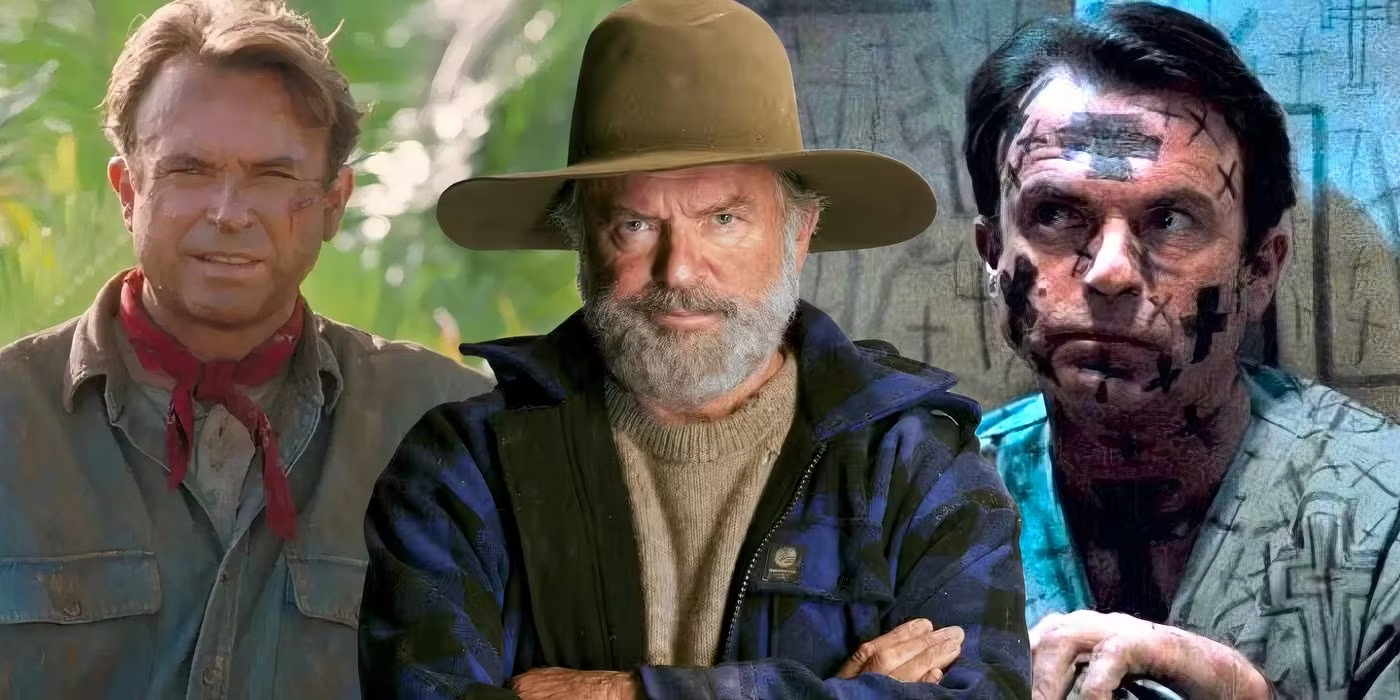

Sam Neill, the acclaimed New Zealand actor whose calm authority, dry humour and remarkable versatility carried him from independent cinema to some of Hollywood’s biggest productions, has died at the age of 78.
His family announced that he died in Sydney on Monday, July 13, 2026. They described his death as “sudden and unexpected” and said he was surrounded by relatives during his final moments. No official cause of death was disclosed. His family also confirmed that Neill remained cancer-free at the time of his passing.
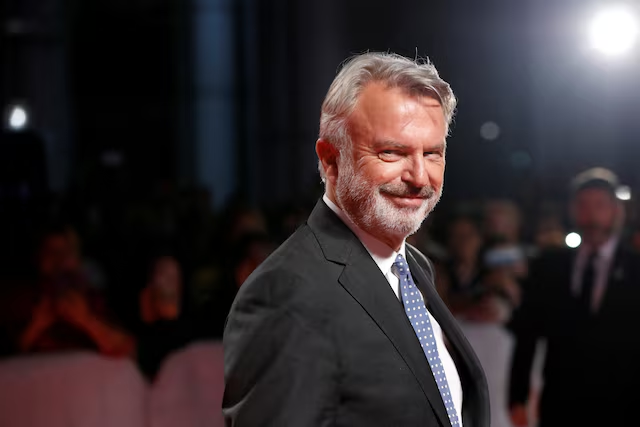
For millions of viewers, Neill will always be remembered as palaeontologist Dr Alan Grant in Steven Spielberg’s Jurassic Park. Yet his career was far broader than one blockbuster. Over more than five decades, he moved confidently between historical drama, psychological thriller, science fiction, horror, comedy and television.
Whether playing a restrained husband, a sinister authority figure or an ordinary man caught in extraordinary circumstances, Neill gave his characters intelligence, humanity and emotional depth. His screen career included more than 120 acting roles, ranging from New Zealand classics to internationally successful Hollywood productions.
A Sudden Loss After His Cancer Recovery
News of Neill’s death came only months after he publicly shared that he was cancer-free.
The actor revealed in 2023 that he had been diagnosed with angioimmunoblastic T-cell lymphoma, a rare form of non-Hodgkin lymphoma. He continued acting and speaking openly about his illness while receiving treatment.
In April 2026, Neill announced that treatment had successfully cleared the cancer from his body. His family’s statement following his death made clear that he remained cancer-free before his passing.
Because no medical cause was provided, reports should not assume that his death was connected to his previous illness. What has been confirmed is that his passing was unexpected and that he spent his final moments surrounded by members of his family.
The announcement prompted tributes from across New Zealand, Australia and the international entertainment industry.
New Zealand Prime Minister Christopher Luxon described Neill as one of the country’s greats and credited him with helping take New Zealand stories to a worldwide audience. Luxon noted that Neill began working when the country had only a small film industry and became an important figure in its transformation into a major cultural export.
Australian Prime Minister Anthony Albanese remembered Neill for his dignity, humour and thoughtful personality. Former New Zealand Prime Minister Helen Clark also praised the actor for bringing international recognition and pride to his adopted country.
From Northern Ireland to New Zealand
Neill was born Nigel John Dermot Neill on September 14, 1947, in Omagh, Northern Ireland.
He moved with his family to New Zealand when he was seven years old. During childhood, he began using the name Sam instead of Nigel. New Zealand would eventually become central to his personal identity, creative work and public life.
He grew up in the South Island and attended boarding school in Christchurch. Acting offered the naturally shy young Neill an opportunity to step outside himself and express emotions through performance.
Before becoming internationally famous, he also worked behind the camera and developed an understanding of directing, editing and documentary production. That experience contributed to the controlled and thoughtful acting style that later became one of his defining qualities.
His first major breakthrough came in the 1977 New Zealand political thriller Sleeping Dogs. Neill played Smith, an ordinary man who becomes involved in a period of political unrest and government repression.
The production arrived when New Zealand’s modern feature-film industry was still developing. Neill’s performance established him as a serious screen actor and helped open the door to opportunities in Australia and the international film industry.
The Beginning of an International Career
Neill gained wider recognition in Gillian Armstrong’s 1979 film My Brilliant Career, starring opposite Judy Davis. The film became an important part of the revival of Australian cinema and introduced both actors to larger international audiences.
During the following decade, Neill demonstrated an ability to move between traditional leading-man roles and darker, more complicated characters.
He played Damien Thorn in Omen III: The Final Conflict, appeared in the intense psychological drama Possession and worked with Meryl Streep in Plenty and A Cry in the Dark.
In the maritime thriller Dead Calm, directed by Phillip Noyce, Neill starred alongside Nicole Kidman and Billy Zane. The suspenseful production helped strengthen his reputation as an actor capable of carrying emotionally demanding and psychologically complex stories.
These performances revealed the qualities that would define much of Neill’s career. He could appear sophisticated without becoming distant, vulnerable without seeming weak and threatening without relying on exaggerated behaviour.
Directors trusted him with characters who required restraint. He frequently communicated through silence, posture and facial expression rather than dramatic speeches.
Becoming Dr Alan Grant in Jurassic Park
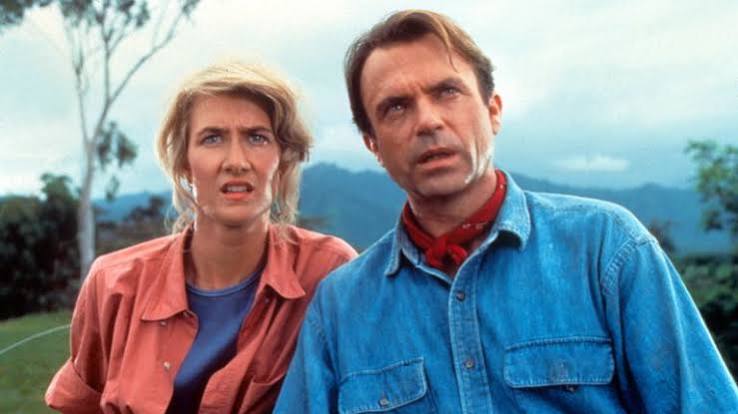
Neill’s most famous role arrived in 1993 when he played palaeontologist Dr Alan Grant in Steven Spielberg’s Jurassic Park.
The film brought dinosaurs to life through groundbreaking visual effects, but its success also depended on believable human characters who could guide viewers through its story.
As Grant, Neill portrayed a scientist who understood prehistoric animals but felt considerably less comfortable around children. He entered the story as a cautious expert and gradually became a courageous, protective figure after the park’s security systems failed.
Neill’s realistic performance gave the film’s enormous action sequences a believable human centre.
Grant was not presented as a conventional action hero. He was practical, intelligent, observant and frequently frightened. Those qualities made his bravery more convincing. Neill’s dry delivery and understated reactions also helped balance the movie’s danger, humour and sense of wonder.
Although he did not return for The Lost World: Jurassic Park, Neill again played Grant in Jurassic Park III in 2001.
More than two decades later, he reunited with original stars Laura Dern and Jeff Goldblum in Jurassic World Dominion in 2022. Their return connected the original film with a new generation and demonstrated the lasting affection audiences had for Grant and his fellow characters.
More Than a Blockbuster Star
Although Jurassic Park made Neill globally recognisable, he never allowed the franchise to define the limits of his career.
In 1993, the same year Spielberg’s blockbuster was released, Neill appeared in Jane Campion’s acclaimed drama The Piano. He played Alisdair Stewart, a wealthy and emotionally restricted settler whose marriage becomes increasingly troubled.
His controlled, uncomfortable and morally complicated performance was far removed from the heroic Dr Alan Grant and demonstrated his exceptional range.
Neill also appeared in The Hunt for Red October as Soviet submarine officer Captain Vasily Borodin. In John Carpenter’s In the Mouth of Madness, he played insurance investigator John Trent, while in the science-fiction horror film Event Horizon, he portrayed the increasingly disturbed Dr William Weir.
These films allowed him to explore suspense, psychological collapse, supernatural horror and science fiction without losing the realism that distinguished his performances.
His television work was equally varied.
Neill earned recognition for playing the legendary wizard in the 1998 miniseries Merlin. He portrayed Cardinal Thomas Wolsey in The Tudors and the intimidating police inspector Chester Campbell in Peaky Blinders.
His later television projects included Invasion, the Australian legal drama The Twelve and the family mystery series Apples Never Fall.
A Memorable Return to New Zealand Cinema
One of Neill’s most beloved later performances came in Taika Waititi’s 2016 comedy-drama Hunt for the Wilderpeople.
Neill played Hector, a gruff and emotionally reserved man who forms an unlikely relationship with a young foster child. After a series of misunderstandings, the pair become the focus of a nationwide search while attempting to survive in the New Zealand wilderness.
The character allowed Neill to combine toughness, sadness, comedy and tenderness. Beneath Hector’s unfriendly exterior was a lonely man slowly discovering responsibility and affection.
The performance introduced Neill to younger audiences while bringing him back to the landscapes, humour and storytelling traditions of New Zealand cinema. The film became one of the roles for which he was most warmly remembered in his adopted country.
His Lasting Connection to New Zealand
Despite achieving international success, Neill maintained a strong connection to New Zealand.
His career helped link the country’s developing film culture with the wider international entertainment industry. He continued appearing in New Zealand productions after becoming a Hollywood star and consistently supported the idea that local stories deserved global attention.
Neill also explored the country’s screen history as a filmmaker. He co-directed Cinema of Unease, a documentary examining New Zealand cinema and the distinctive isolation, darkness and humour found in many of the country’s films.
The documentary premiered at the Cannes Film Festival in 1995 and included elements of Neill’s personal experience and reflections on New Zealand’s cultural identity.
His importance to New Zealand went beyond celebrity. He represented how an actor from a relatively small national industry could create a global career without abandoning his cultural roots.
That balance made him especially admired at home.
Life Away From the Camera
Outside acting, Neill was a winemaker and founder of Two Paddocks, a vineyard business established in Central Otago in 1993.
He frequently shared humorous photographs and videos from his farm. His animals, some named after famous friends and colleagues, became familiar to his social-media followers.
This public image was noticeably different from traditional Hollywood celebrity. Neill appeared relaxed, self-deprecating and more interested in storytelling, animals and wine than glamour.
His warmth and humour helped audiences feel connected to the person behind the performances.
In 2023, he published his memoir, Did I Ever Tell You This?
The book reflected on his childhood, acting career, friendships, filmmaking experiences and cancer diagnosis. Written with humour and honesty, it offered a personal account of a life shaped by unexpected opportunities, difficult experiences and gratitude for family and friendship.
Honours and Recognition
Neill received numerous awards and nominations during his career and was knighted for his outstanding contribution to film.
His honours recognised not only his international success but also his influence on New Zealand’s cultural identity and screen industry.
His greatest achievement, however, may have been the extraordinary range of audiences he reached.
Art-house film fans knew him from My Brilliant Career, The Piano and Possession. Blockbuster audiences knew him from Jurassic Park. Horror fans remembered Event Horizon and In the Mouth of Madness. Television viewers recognised him from Merlin, Peaky Blinders and The Tudors.
New Zealand audiences embraced him in Sleeping Dogs and Hunt for the Wilderpeople.
Few actors create careers that feel both globally famous and deeply personal. Neill achieved that without losing the modest, intelligent quality that made his work distinctive.
Remembering Sam Neill
Sam Neill leaves behind a body of work stretching across generations, countries and genres.
He could hold the centre of a major Hollywood blockbuster while making a quiet independent drama feel equally important. He brought credibility to fantastic stories and complexity to characters who might otherwise have appeared simple.
His death represents a major loss for New Zealand and international cinema. Yet his performances remain vivid: Dr Alan Grant staring in amazement at a living dinosaur, Hector reluctantly becoming a father figure and Captain Borodin dreaming of a peaceful future.
Neill is survived by four children and eight grandchildren. For his relatives, friends and colleagues, the loss is personal and immediate. For audiences, his legacy will continue every time one of his films is watched again.
Sam Neill was more than the star of Jurassic Park. He was a thoughtful artist, a proud New Zealander, a filmmaker, writer, winemaker and one of the most dependable actors of his generation.
His career proved that quiet performances can leave the loudest and most lasting impression.
Would you like an alert if his family releases an official cause of death or funeral details?