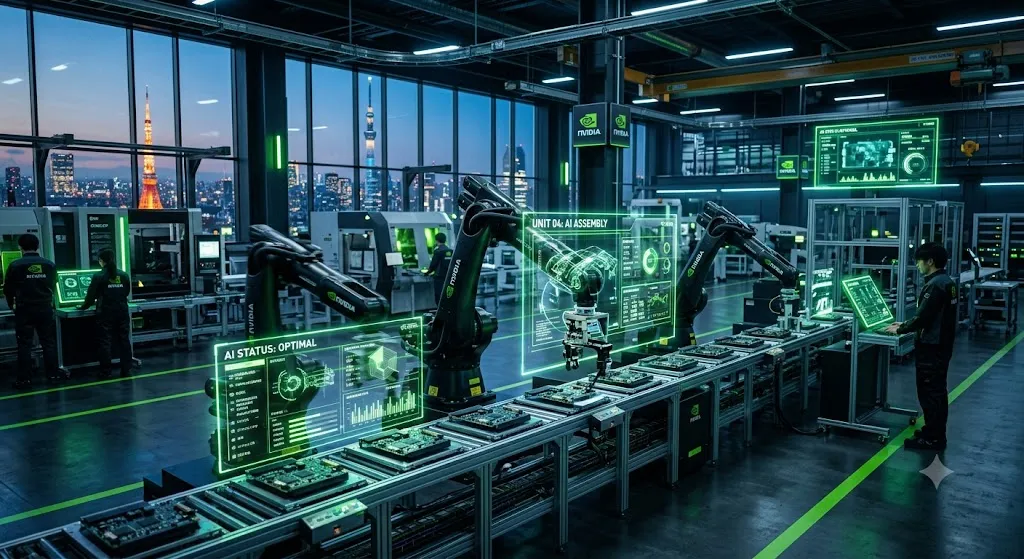

If you are trying to overcome modern manufacturing and automation challenges, understanding Nvidia Japan robotics AI is the smartest move you can make today. For businesses struggling with labor shortages or inefficient production lines, combining Japan’s legacy of robotic hardware with Nvidia’s cutting-edge AI software is solving real-world operational bottlenecks faster than ever before.
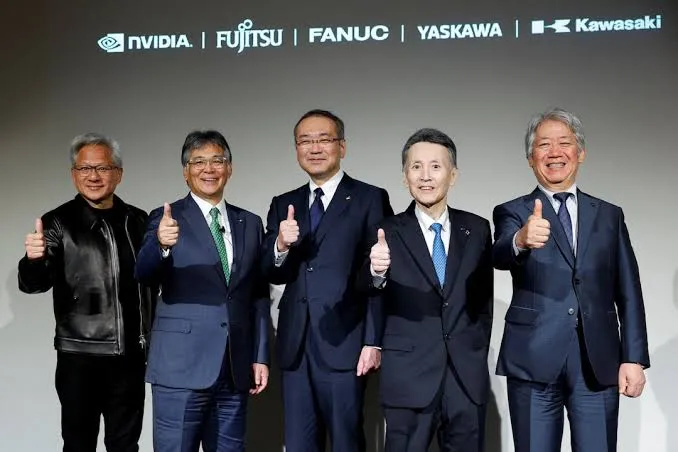
From smart factories to automated healthcare assistants, the fusion of artificial intelligence and physical robotics is no longer just a sci-fi concept. It is happening right now. In this article, we will break down exactly how this technology works, why it matters, and how you can prepare for the next generation of AI-driven automation.
Quick Answer
Nvidia Japan robotics AI refers to the integration of Nvidia’s advanced AI computing platforms-like Nvidia Isaac and Omniverse-with Japan’s world-leading robotics hardware. This collaboration enables the creation of autonomous, highly intelligent robots capable of learning, adapting, and operating safely alongside humans in manufacturing, logistics, and healthcare sectors.
What Is Nvidia Japan Robotics AI?
To understand this technological shift, we have to look at the two powerhouses involved. Japan has long been the global leader in mechatronics and industrial robotics. Companies based in Japan manufacture a massive percentage of the world’s factory robots. Nvidia, on the other hand, is the undisputed king of artificial intelligence computing and graphical processing.
Nvidia Japan robotics AI is the intersection of these two domains. Instead of traditional robots that simply follow hard-coded, repetitive scripts, Nvidia provides the “brains” needed to make these machines truly autonomous. Using platforms like the Nvidia Isaac robotics platform, developers can train robots in virtual environments using generative AI before deploying them into the real world.
This means a robot can look at an unstructured environment—like a messy warehouse floor—and use AI vision to figure out how to navigate it, pick up irregular objects, and complete tasks without human intervention.
Why Nvidia Japan Robotics AI Matters
You might be wondering why this specific intersection of technology is making such waves in the tech community. The answer lies in urgent socioeconomic needs and technological maturity.
- Solving the Labor Shortage: Japan is facing a rapidly aging population and a shrinking workforce. There simply are not enough human workers to fill roles in logistics, agriculture, and elderly care. Intelligent robots are no longer a luxury; they are an economic necessity.
- The Shift from Automation to Autonomy: Traditional automation requires highly controlled environments. If a part on an assembly line is slightly out of place, a traditional robot will fail. With AI integration, robots can “see” and adapt in real-time, greatly reducing downtime and error rates.
- Speed of Development: Historically, programming a robot to do a new task took months of trial and error. Nvidia’s AI platforms allow engineers to simulate millions of hours of robotic training in a matter of days.
Key Benefits of Integrating AI and Robotics
Integrating advanced AI models into physical hardware unlocks a massive range of benefits for businesses and consumers alike.
- Enhanced Adaptability: AI-powered robots can adapt to changing environments, handle unfamiliar objects, and safely work alongside humans.
- Cost Efficiency: By reducing errors and increasing continuous operational hours, businesses see a significant return on investment (ROI).
- Sim-to-Real Capabilities: Training robots in Nvidia Omniverse (a highly realistic virtual simulation) means the robot is already an expert by the time its software is uploaded into the physical machine.
- Safety: Advanced spatial computing and computer vision allow these robots to instantly stop or alter their path to avoid human injury, a crucial requirement for collaborative robots (cobots).
Step-by-Step Guide: How It Works
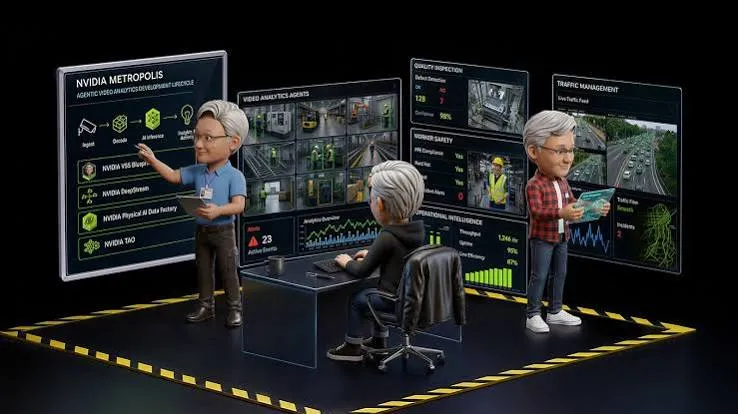
How does a company actually build and deploy an AI robot using this technology stack? Here is a practical look at the workflow.
Step 1: Create a Digital Twin
Before a physical robot is even touched, developers build a “digital twin” of the robot and its working environment (like a factory or hospital) using Nvidia Omniverse. This virtual world perfectly simulates real-world physics, lighting, and gravity.
Step 2: Virtual Training with Nvidia Isaac Sim
In this virtual world, the robot is given tasks. Using reinforcement learning, the AI tries to complete the task over and over. Because it is a simulation, this training happens at lightning speed. The AI learns how to walk, grasp items, and navigate obstacles safely.
Step 3: Hardware Integration
Once the AI model is highly proficient, the software is transferred to physical hardware powered by Nvidia edge computing chips, such as the Jetson Thor robotics computer.
Step 4: Real-World Deployment and Edge Processing
The physical robot is deployed into the real world. Because of the powerful onboard AI chips, the robot processes sensor data locally (on the edge) rather than relying on a slow cloud connection, ensuring zero-latency decision-making.
Best Practices and Expert Tips
If your business is looking to invest in robotic automation, keeping these expert tips in mind will save you time and money.
- Start with Simulation: Never try to train an AI robot directly in the physical world first. It is dangerous, expensive, and slow. Always leverage digital twin simulations.
- Prioritize High-Quality Data: AI is only as good as the data it trains on. Ensure your virtual environments accurately reflect the real-world conditions the robot will face.
- Invest in Edge Computing: To ensure quick reaction times, make sure your robotic hardware has powerful onboard processing capabilities. Relying entirely on cloud AI for real-time robotic movement is a recipe for disaster.
Common Mistakes to Avoid
Even top tech companies stumble when deploying advanced AI robotics. Here is what to avoid:
- Underestimating Network Infrastructure: While edge processing handles immediate movements, these robots still need to sync data back to central servers. A weak local network will throttle your fleet’s efficiency.
- Ignoring the Human Element: The goal of modern AI robotics is human-machine collaboration, not outright replacement. Failing to train your human staff on how to interact with cobots will lead to friction and accidents.
- Overcomplicating the First Project: Start small. Instead of trying to build a fully autonomous humanoid robot on day one, start with automating a single, high-friction task, like warehouse material transport.
Future Trends: What to Expect
The landscape of Nvidia Japan robotics AI is evolving daily. Here is what you should keep an eye on over the next few years.
The Rise of Humanoid Robots
Nvidia recently announced Project GR00T, a general-purpose foundational model specifically for humanoid robots. Combined with Japan’s expertise in bipedal robotics, we are going to see a surge in human-shaped robots capable of understanding natural language and learning human movements simply by observing them.
Generative AI Meets Physical Hardware
Just as generative AI has revolutionized content creation (which you can read more about in our guide to the Ultimate AI Reels Generator), it is now revolutionizing code generation for robots. Soon, factory managers will be able to type a prompt like, “Pick up the red boxes and stack them by the door,” and the robot will automatically generate the code required to execute that action.
Final Thoughts
The synergy between Nvidia’s massive computing power and Japan’s peerless robotic engineering is establishing a new standard for global automation. Whether it is solving critical labor shortages or maximizing factory efficiency, this technology is moving us from an era of programmed machines to an era of intelligent, thinking companions.
Staying ahead of these trends is vital for anyone in the tech, business, or manufacturing sectors. If you are looking to integrate advanced AI solutions into your workflow, or if you simply have questions about where to start, do not hesitate to reach out. Contact us today to see how TrendCivix can help you navigate the ever-evolving world of AI technology.
FAQs
1. What is the Nvidia Isaac platform?
Nvidia Isaac is a comprehensive platform designed for developing, simulating, and deploying AI-powered robots. It includes tools like Isaac Sim for virtual training and Isaac ROS for software development, greatly speeding up robotic engineering.
2. How is AI changing robotics in Japan?
AI is transforming Japanese robotics by shifting them from rigid, pre-programmed machines to adaptable, autonomous systems capable of computer vision, natural language processing, and real-time decision-making.
3. What is a digital twin in robotics?
A digital twin is a highly accurate virtual replica of a physical robot and its environment. It allows engineers to test and train AI models safely in a simulated world before applying them to physical hardware.
4. Can generative AI be used in physical robots?
Yes. Generative AI is increasingly being used to help robots understand natural language commands and write their own executing code, bridging the gap between digital AI and physical actions.
5. How do edge computing chips improve robots?
Edge computing chips, like Nvidia’s Jetson series, allow robots to process heavy AI tasks locally on the machine. This eliminates latency, ensuring the robot can react to its environment in real-time without waiting for cloud servers.