
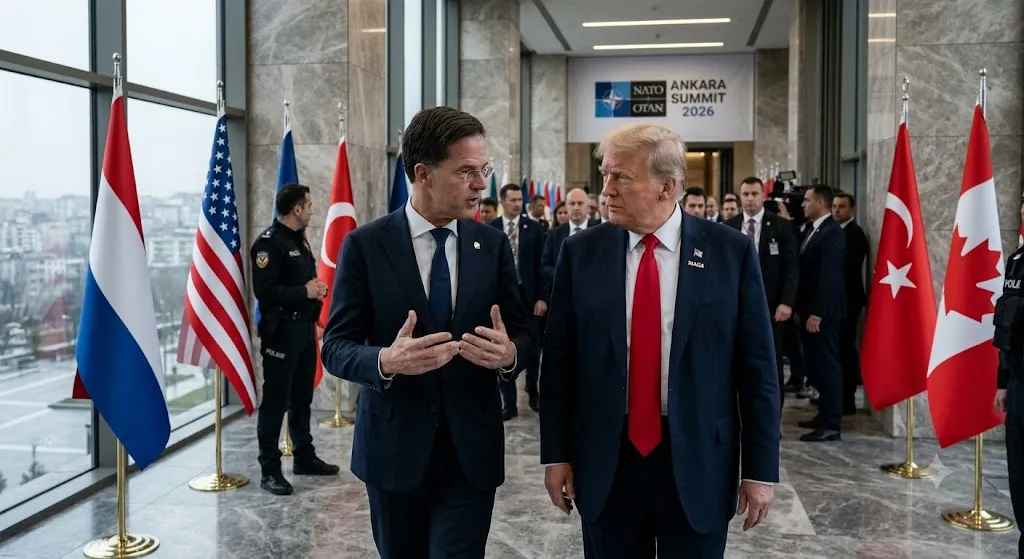
The geopolitical chessboard is shaking, and all eyes are on the pivotal 2026 Ankara Summit. As member states gather in the Turkish capital, the primary mission for European leaders isn’t just managing global security threats—it’s managing the unpredictable nature of U.S. President Donald Trump. With Washington ratcheting up intense pressure over the recent war in Iran, the Strait of Hormuz crisis, and trailing defense commitments, the survival of the world’s most powerful military alliance rests heavily on one man’s shoulders.
Enter Mark Rutte, the 14th Secretary General of NATO. Widely recognized on the global stage as “NATO’s Trump whisperer,“ the former Dutch Prime Minister has assumed a high-stakes role. While other Western leaders often counter Trump’s rhetoric with ideological resistance, Rutte has pioneered an entirely different playbook: transactional diplomacy rooted in hard numbers, flattery, and tangible accountability.
This article deconstructs the unique strategy employed by NATO’s Trump whisperer to stabilize the transatlantic rift, what it means for the newly minted “NATO 3.0” framework, and how these shifts impact global political stability.
NATO’s Trump whisperer refers to NATO Secretary General Mark Rutte, who earned the moniker due to his unique ability to manage, appease, and negotiate effectively with Donald Trump. By leveraging transactional diplomacy, emphasizing massive European defense spending increases (aiming for 5% of GDP by 2035), and presenting data-driven metrics, Rutte serves as the essential diplomatic bridge keeping the United States committed to the alliance during high-tension periods.
What Is NATO’s Trump Whisperer Strategy?
The phrase “Trump whisperer” describes a specific diplomatic approach tailored to handle the highly personalized, transactional, and business-centric political style of Donald Trump. Rather than focusing on historical obligations or shared democratic values—arguments that historically fail to sway the current U.S. administration—Mark Rutte treats international diplomacy like a high-level corporate negotiation.
Rutte’s strategy relies on a few core pillars:
- Validating Trump’s Grievances: Instead of deflecting criticism, Rutte openly praises Trump for forcing Europe to step up.
- Presenting Bulletproof Data: Using visual aids, charts, and direct economic indicators to prove compliance.
- Reframing the Narrative: Shifting the conversation from “What is the U.S. doing for Europe?” to “How is Europe’s spending directly benefiting American jobs and security?”
Why NATO’s Trump Whisperer Dynamic Matters Today
The timing of Rutte’s leadership is critical. The first half of 2026 has seen profound strain on the alliance. Following the outbreak of the U.S.-led war in Iran and subsequent closures of the strategic Strait of Hormuz, Trump openly questioned the core utility of NATO. His public frustration boiled over when key allies like France and Spain restricted the use of their airspace for U.S. military operations, widening an already volatile transatlantic rift.
Without an effective mediator, the risk of a chaotic U.S. withdrawal or severe degradation of collective deterrence is an acute reality. If you are tracking how these shifting dynamics affect domestic policy and executive leadership, explore our deep dive on Trump’s Wall Street presence and Oval Office strategies.
Rutte’s role matters because he provides a shield of predictability. By transforming raw political friction into structured demands, he keeps the superpower engaged while giving European nations the necessary room to undergo a massive structural adjustment.
Key Benefits of Rutte’s Diplomatic Playbook
By utilizing a transactional approach, NATO’s Trump whisperer has successfully achieved milestones that many seasoned diplomats deemed impossible:
- Securing Trillions in Commitments: European allies and Canada have increased their core defense expenditures by nearly 20%, representing over $258 billion in extra investment across 2025 and 2026 alone.
- The Path to 5% GDP Targets: At the previous summit in The Hague, allies committed to a monumental defense spending target of 5% of GDP by 2035, a massive leap from the historical 2% benchmark.
- Tying Defense to U.S. Jobs: Rutte explicitly highlights to the White House how European defense procurement directly supports over 83,000 manufacturing jobs inside the United States.
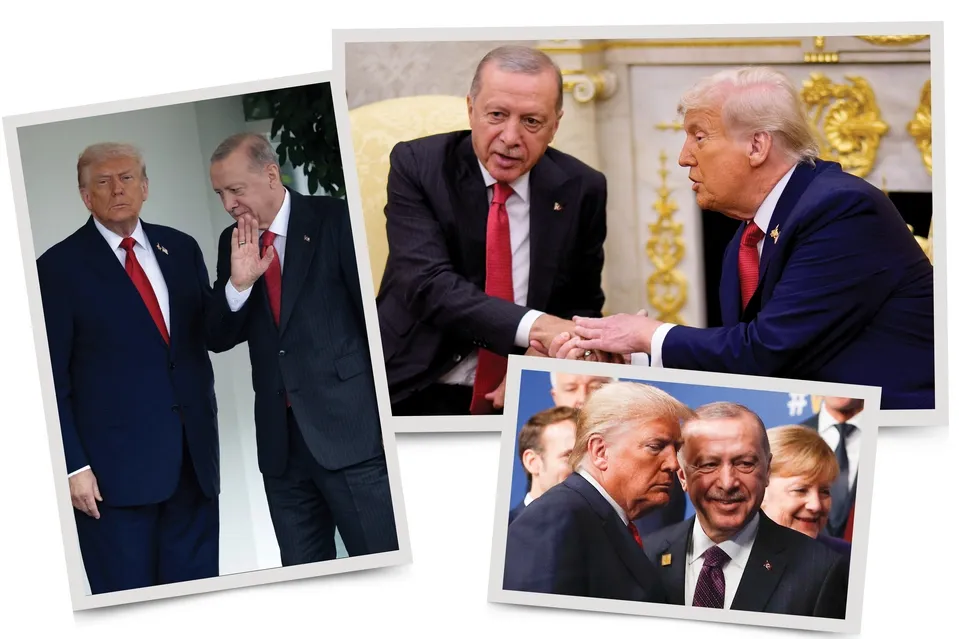
- Preventing Immediate Fractures: Despite public broadsides from the Oval Office, Rutte’s back-channel negotiations secured Trump’s critical attendance at the Ankara Summit alongside Turkish President Recep Tayyip Erdoğan.
How It Works: A Step-by-Step Guide to Transactional Diplomacy
How does a leader actually “whisper” to an unpredictable superpower? Rutte’s operational method inside the Oval Office serves as a masterclass in modern political communication.
Step 1: Lead with Compliance and Praise
During his recent Oval Office visits, Rutte bypassed philosophical arguments about global peace. Instead, he walked in and explicitly thanked Trump for his leadership, stating to the press that while lopsided spending had been a structural problem since President Eisenhower, “this President got this done.”
Step 2: Bring the Visual Proof
Rutte famously uses large, clearly formatted charts to present data. He does not bury the message in lengthy white papers. He physically presents the trillion-dollar cumulative core defense increases directly to Trump to offer instant, scannable proof of delivery.
Step 3: Pivot to Interdependence
When addressing complex conflicts like the situation in Ukraine or the fallout from the Iran war, Rutte avoids lecturing on moral obligations. He reframes European defense strength as a vital asset that reduces the financial and operational burden on the American taxpayer.
Best Practices and Expert Tips for the Alliance
For the 31 other member states looking to survive the current geopolitical climate, copying Rutte’s playbook is no longer optional. Experts point to several best practices:
Deliver Concrete Plans: Do not show up to international summits with vague promises. Allies must present “clear, concrete, and credible” spending timelines to meet immediate military requirements.
- Accelerate NATO 3.0: Transition proactively toward a Europe-led alliance architecture. This means building out independent regional logistics, roads, bridges, and ports capable of handling large-scale troop movements without relying entirely on U.S. infrastructure.
- Emphasize Local Responsibility: European nations must take total ownership of their adjacent security zones, particularly across Eastern and Southern European borders.
Common Mistakes to Avoid in Modern Geopolitics
When dealing with a highly personalized U.S. administration, traditional diplomatic maneuvers can backfire spectacularly.
- Relying on “Business as Usual” Rhetoric: Invoking the 1949 founding charters or sentimental historical ties is ineffective. The current White House views these arguments as excuses for Europe to avoid paying its fair share.
- Public Rebuttals and Moralizing: Publicly lecturing the U.S. president on international law or norms frequently results in aggressive social media counter-inputs that threaten the stability of the entire organization.
- Failing to Account for Domestic Pressures: Foreign leaders often forget that U.S. foreign policy is deeply tied to domestic economic sentiment. If a policy cannot be explained as a win for the American worker, it is vulnerable.
Future Trends: What to Expect Next
The era of a U.S.-dominated NATO is steadily evolving. Moving forward through 2026 and beyond, we are entering the phase of “NATO 3.0.“
We will see a highly Europeanized version of the alliance. While a total U.S. exit remains unlikely due to deep-seated institutional frameworks and congressional safeguards, the operational center of gravity is shifting. Europe will increasingly bear the financial burden of continental defense, while Washington maintains a specialized, strategic deterrence role.
The immediate indicator of success will be how smoothly the transition of power and responsibility unfolds during the Ankara Summit, and whether European leaders can successfully present unified defense contracts to prove they are built for self-sufficiency.
FAQs
Who is called NATO’s Trump whisperer?
Mark Rutte, the Secretary General of NATO and former Prime Minister of the Netherlands, is widely referred to as NATO’s Trump whisperer due to his pragmatic and highly effective ability to manage relationships and negotiate with Donald Trump.
What is the primary focus of the 2026 NATO Ankara Summit?
The 2026 Ankara Summit primarily focuses on enforcing new, elevated European defense spending targets (up to 5% of GDP by 2035), resolving internal friction over the war in Iran, and managing the structural transition toward a Europe-led alliance framework known as NATO 3.0.
What is the NATO 3.0 strategy?
NATO 3.0 is a strategic framework pushed by both Pentagon leadership and European defense strategists. It focuses on restructuring the alliance so that European nations take primary financial and operational responsibility for their continent’s security, reducing their long-term reliance on the United States.
How much have European NATO allies increased their defense spending?
Led by the diplomatic pushes of Mark Rutte, European allies and Canada increased their core defense spending by nearly 20% over the last year, injecting over $258 billion in combined extra investment into the alliance’s infrastructure and defense capabilities.
Can a U.S. President unilaterally pull out of NATO?
In 2023, the U.S. Congress passed an explicit law preventing any sitting president from withdrawing from NATO without formal Senate approval or an Act of Congress. However, a president can still significantly alter troop levels, funding allocations, and operational cooperation via executive authority.
Final Thoughts
Mark Rutte’s tenure as NATO’s Trump whisperer proves that in a shifting world, adaptability is the ultimate form of currency. By choosing pragmatism over pride, Rutte has managed to keep the core tenets of transatlantic security intact against historic headwinds.
Understanding these fast-moving global realignments is essential for staying ahead of economic and political trends. To share your perspective on these diplomatic shifts, or to submit your analysis to our editors, feel free to visit our Contact Us page. Don’t forget to explore our politics section for more up-to-the-minute breakdowns of international affairs.