
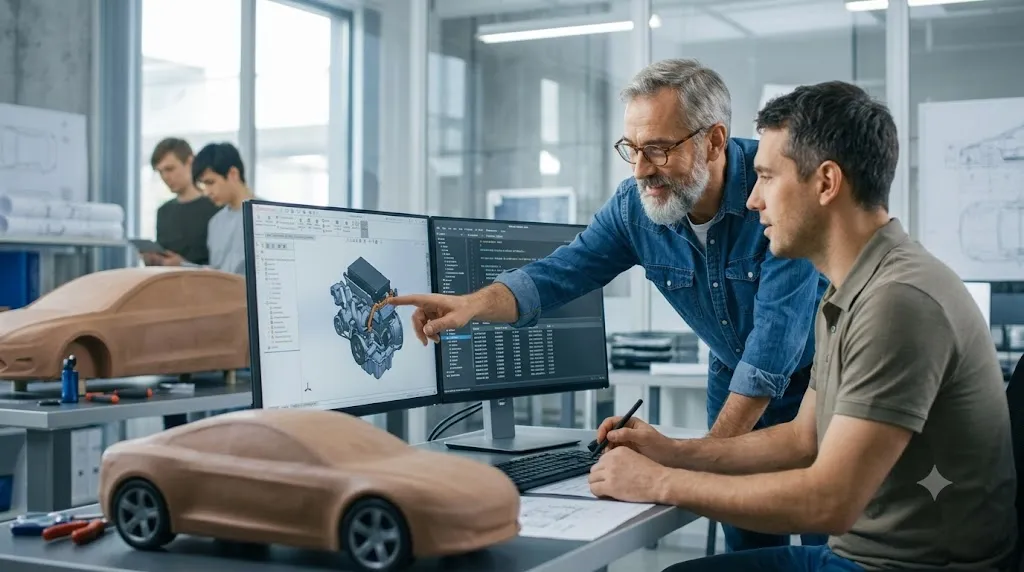

The news that Ford rehires gray beard engineers highlights how the rush to automate everything has officially hit a roadblock. For the past few years, the automotive industry has sprinted toward a future dominated by artificial intelligence, automated code deployment, and digital-first manufacturing. Tech executives promised that algorithms could design cars faster, test code better, and cut overhead costs down to a fraction of traditional budgets.
But cars aren’t just software apps; they are multi-ton machines operating at high speeds in the real world. When complex AI systems began running into deployment issues, software bugs, and structural calibration blind spots, a hard truth came to light: code cannot replace decades of hands-on mechanical intuition.
In a fascinating turn of events, Ford Motor Company has started bringing its veteran, retired workforce back onto the floor. This decision sends a massive signal to the entire tech and manufacturing sector about the limits of pure automation.
Ford rehires gray-bearded engineers to fix complex system integration and testing errors that automated AI tools failed to catch. While AI accelerates early-stage design, veteran engineers provide the critical real-world oversight, historical troubleshooting context, and safety-critical validation that algorithms currently lack.
What Is the “Gray Beard” Engineer Rehire Movement?
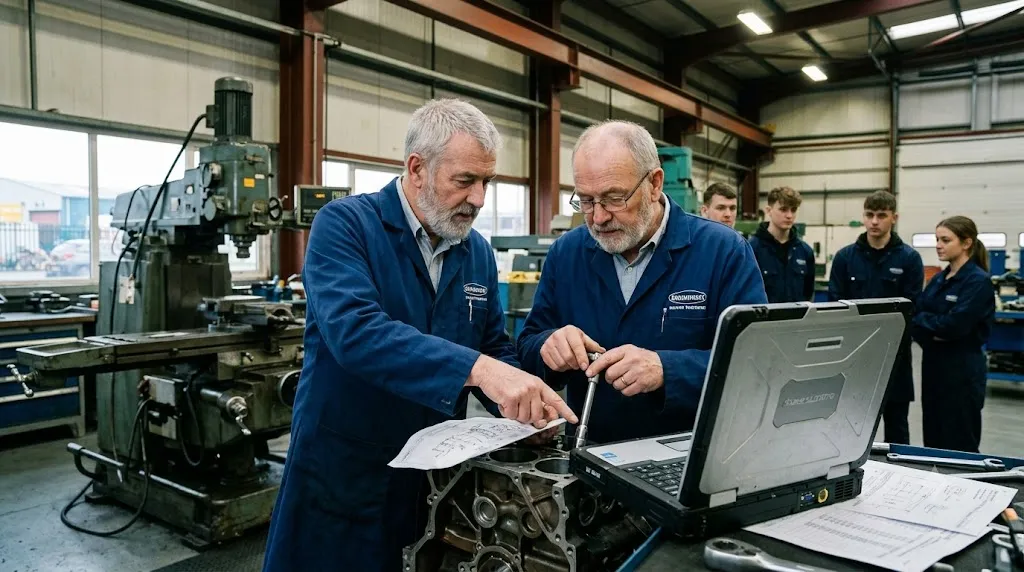
The term “gray beard engineer” traditionally refers to legacy professionals who spent decades mastering mechanical engineering, powertrain dynamics, electrical wiring layout, and physical manufacturing processes. These are the experts who understand how a car behaves when it hits a pothole in freezing weather, not just how it looks on a computer simulation screen.
The rehire movement is a strategic talent acquisition shift where industrial companies bring these retired or semi-retired experts back as consultants, mentors, or full-time problem solvers. Instead of letting decades of specialized institutional knowledge fade away, Ford is actively integrating these veterans back into active product development lifecycles.
Why the Ford Rehires Gray Beard Engineers Strategy Matters
When the automotive world shifted its focus toward Electric Vehicles (EVs) and software-defined architectures, massive hiring sprees targeted young software developers and data scientists. However, treating a vehicle strictly like a smartphone on wheels created a disconnect.
Algorithms excel at processing data based on historical parameters, but they struggle with novel, multi-variable physical world failures. If an AI tool outputs a flawed CAD design or faulty code for an electronic braking module, it takes a human eye trained by thirty years of trial and error to look at the blueprint and say, “That will fail under real-world stress.”
This strategy highlights a growing realization across the entire technology spectrum: total reliance on automated systems without seasoned human guardrails leads to expensive delays. This delicate balance between advanced technology and human boundaries mirrors trends seen across platforms today, much like how tech giants must recalibrate their algorithms when Google limits Meta Gemini AI capabilities to maintain quality control.
Key Benefits of Combining Veteran Engineers with AI Tech
The integration of legacy engineers back into automated workflows offers profound advantages for manufacturing stability:
- Accelerated Root-Cause Analysis: When a vehicle prototype experiences unexpected vibration or electrical interference, veteran engineers can diagnose the mechanical root cause in minutes based on historical memory, saving weeks of algorithmic data processing.
- Enhanced Safety Validation: Senior engineers possess an acute understanding of regulatory compliance and safety margins, ensuring that AI-generated optimization models don’t compromise structural integrity to save weight.
- Effective Mentorship for Tech Talent: Young software developers gain an invaluable education on how code translates into mechanical physics, creating a more well-rounded engineering culture.
- Reduction in Costly Recalls: Catching software integration errors during the pre-production phase rather than through post-launch over-the-air updates saves automotive brands millions of dollars and preserves consumer trust.
How It Works: Balancing Human Intuition and AI Automation
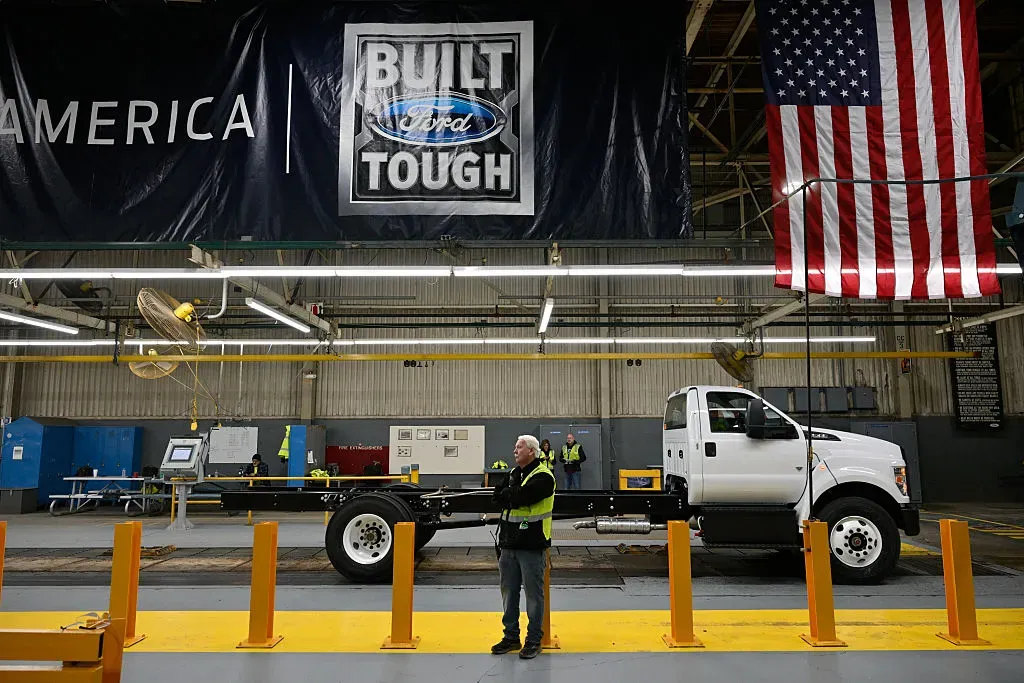
Successfully blending legacy human expertise with cutting-edge AI infrastructure requires a structured operational approach. Companies cannot simply throw veterans into a modern software sandbox and expect instant results. Here is how Ford and other forward-thinking industrial giants build a collaborative workflow:
[AI Engine Optimization] —> [Generates Design & Software Code]
|
v
[Gray Beard Review Panel] –> [Validates Physical Feasibility & Safety]
|
v
[Production Line Output] —-> [Minimized Defect & Recall Rates]
- AI-Driven Generation: Automated systems handle the repetitive, data-heavy lifting, such as generating thousands of minor aerodynamic iterations or processing baseline code blocks.
- The Veteran Filter: Before any automated design moves to physical prototyping, senior engineering teams review the schematics, specifically looking for blind spots, manufacturing friction points, or edge-case failure modes.
- Physical Testing Alignment: Veterans oversee the physical stress-testing environments, ensuring that the sensor feedback data entering the AI training loop is accurate, grounded, and clean.
Best Practices for Integrating Legacy Talent Into Modern Workflows
If your organization is navigating the complexities of digital transformation or AI integration, take a page out of the automotive playbook with these practical strategies:
Document Legacy Knowledge Early
Do not wait for a system failure to map out what your senior team knows. Create internal repositories, video walkthroughs, and technical case studies documenting past engineering saves.
Build Cross-Generational Pairs
Pair your junior data scientists directly with legacy mechanical specialists. This cross-pollination ensures that software teams understand the physical constraints of the hardware they are writing code for.
Keep the Communication Channels Open
If you are looking to audit your current technology infrastructure or explore how human-centric design can scale your digital output, feel free to visit our TrendCivix Contact Page to connect with our technical consulting insights team.
Common Mistakes to Avoid in AI Digital Transformations
- Replacing Experience Wholesale with Automation: The cost of hiring data engineers is often cancelled out if you lose the domain experts who actually understand the core product being built.
- Ignoring Edge-Case Realities: Algorithms function on probabilities. Human safety and structural reliability, however, depend on managing the rare 1% anomalies that simulations regularly miss.
- Over-Reliance on Virtual Testing: Computer-aided design (CAD) and AI stress simulations are incredibly powerful tools, but they cannot entirely simulate the unpredictable wear, tear, and environmental factors of the physical world.
Future Trends: The Rise of Human-in-the-Loop AI
Moving forward, the tech and automotive landscapes will likely move away from the myth of “unattended automation.” The future belongs to Human-in-the-Loop (HITL) frameworks.
AI will act as a super-charged assistant that processes data, spots macro trends, and builds structural baselines. Meanwhile, experienced human operators will pivot into critical analytical roles, acting as the ultimate authority on safety, ethics, and physical deployment viability. The gray beard rehire trend is not a step backward into the past—it is the stabilization mechanism required for the next phase of industrial automation.
FAQs
Why exactly did Ford rehire gray beard engineers?
Ford brought back veteran engineers to address software bugs, physical testing oversights, and system integration problems that purely automated AI engineering tools missed during vehicle design cycles.
What is a gray beard engineer?
A gray beard engineer is an informal industry term for a senior, often retired professional who possesses decades of deep, hands-on experience in traditional fields like mechanical engineering, manufacturing, and hardware safety.
Can AI completely replace traditional automotive engineers?
No. While AI can optimize designs and write code blocks rapidly, it lacks the real-world contextual problem-solving skills, physical intuition, and safety validation capabilities that senior engineers have developed over decades.
What industries are affected by this shift back to human expertise?
This shift is primarily impacting complex engineering, aerospace, automotive manufacturing, and high-stakes software development fields where failure can result in heavy financial losses or safety risks.
How does human-in-the-loop AI improve product development?
Human-in-the-loop systems leverage AI to complete high-volume, repetitive tasks quickly, while relying on experienced human experts to review outputs, catch edge-case errors, and make final production decisions.
Final Thoughts
Ford’s decision to rehire veteran talent reminds us that technology is only as good as the human experience guiding it. True innovation does not discard the past; it uses the past to build a safer, more reliable future. Balancing automated efficiency with veteran intuition is the ultimate formula for sustainable growth.
If you want to keep up with the latest shifts across technology, automotive manufacturing, and digital workspace trends, don’t forget to bookmark TrendCivix and explore our other content channels for daily updates.