
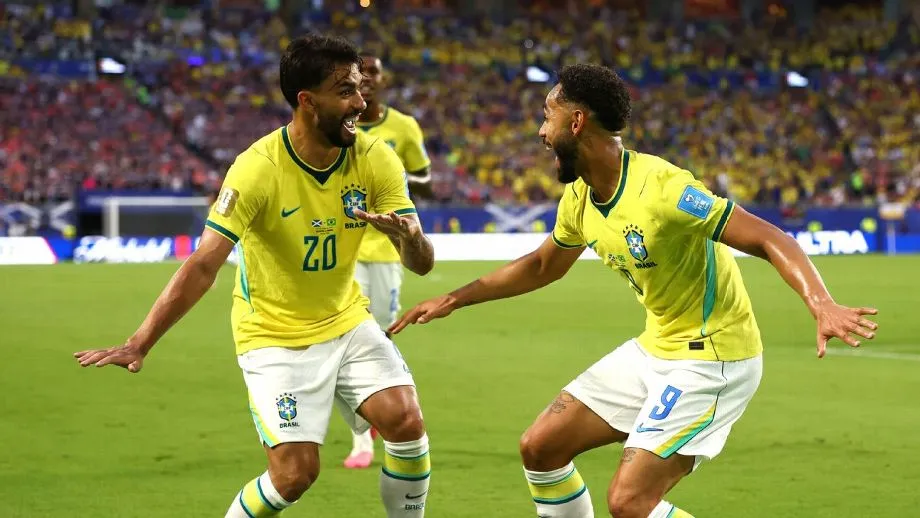

The FIFA World Cup has always been more than just a tournament; it is a global stage where footballing identities are forged, shattered, and reborn. For decades, the yellow and green jersey of Brazil carried an unspoken promise: o jogo bonito (the beautiful game). Yet, entering the FIFA World Cup 2026, fans and critics alike wondered if that flair had been replaced by rigid pragmatism. Following a lukewarm group-stage opener, pressure mounted on the Seleção to deliver a performance worthy of their heritage. On June 24, 2026, at Miami Stadium, they did exactly that.
Brazil officially secured its place in the FIFA World Cup 2026 Round of 32 by defeating Scotland 3-0 to top Group C. A stunning brace from Vinícius Júnior and a clinical strike from Matheus Cunha revived o jogo bonito, confirming the five-time champions remain premier contenders.
What Is the “Jogo Bonito” Revival?
The term o jogo bonito represents a style of football defined by creativity, improvisation, joy, and individual brilliance-traits historically synonymous with Brazilian legends like Pelé, Ronaldinho, and Garrincha. In recent years, international football has drifted toward highly structured, data-driven systems, occasionally neutralizing individual flair.
The “Jogo Bonito Revival” refers to the deliberate structural adjustment by manager Carlo Ancelotti to unleash Brazil’s creative forwards. Rather than forcing players into rigid defensive shapes, the system emphasizes quick transitions, fluid attacking movements, and freedom in the final third. Against Scotland, this philosophy was on full display as the team operated with a telepathic rhythm that systematically dismantled a disciplined European defense.
Why Brazil’s World Cup Group C Dominance Matters
Brazil’s emphatic 3-0 victory over Scotland was crucial for several reasons:
- Extending a Historic Streak: With this victory, Brazil reached the knockout stages for the 15th consecutive World Cup tournament, maintaining the most consistent qualifying record in modern football history.
- Overcoming Early Adversity: The Seleção opened their campaign with a frustrating 1-1 draw against Morocco, sparking massive national media scrutiny. Building momentum with a subsequent 3-0 win against Haiti and replicating it against Scotland proved their growth.
- Golden Boot Contention: Vinícius Júnior’s two goals brought his tournament tally to four goals in three matches, placing him neck-and-neck with global icons Erling Haaland and Kylian Mbappé, and just one behind Lionel Messi.
Key Performance Benefits for the Seleção
The tactical execution seen in Miami provides clear indicators of why this team can go all the way to the final in July.
- Clinical Transition Play: Brazil capitalized instantly on defensive miscues. Vinícius Júnior’s first goal in the 7th minute came from a rapid-fire sequence initiated by 19-year-old sensation Rayan.
- Defensive Resilience: While the attack garnered headlines, keeping back-to-back clean sheets against Haiti and Scotland indicates excellent structural balance.
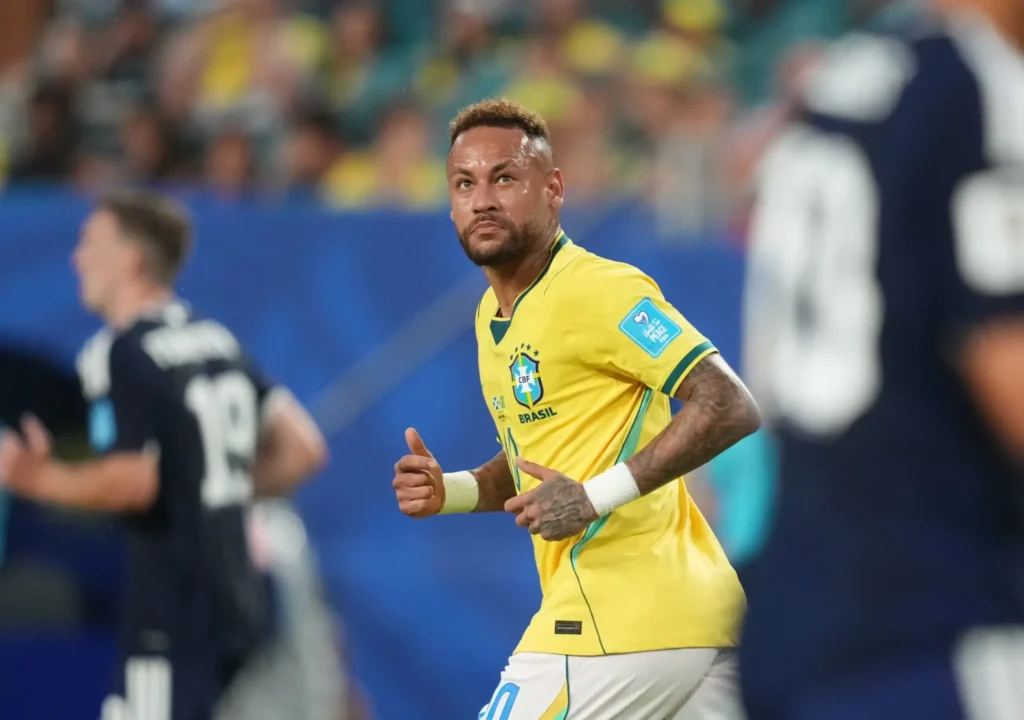
- Squad Depth and Experience: The fixture also marked the ongoing integration of core veterans and young talent. With Neymar back in the squad, making his first appearance for Brazil in nearly three years, the squad possesses unmatched psychological depth.
Analysis: How Ancelotti’s Tactical System Works
Brazil’s modern tactical approach under Carlo Ancelotti can be broken down into three distinct operating phases:
- The Fluid Front Three: The forward line does not occupy fixed positions. Vinícius Júnior frequently drifted centrally from the left wing, confusing Scotland’s low-block defense and creating space for overlapping fullbacks.
- Aggressive Counter-Pressing: The moment possession is lost, midfield engines press high up the pitch to force mistakes near the opponent’s penalty area. Vinícius’s second goal-a close-range header before halftime-was a direct result of sustained pressure forcing a turnover.
- Controlled Tempo: Once ahead, the midfield slows down the game with short, precise passing, tiring out opponents before unleashing direct vertical balls to exploit gaps.
Best Practices and Expert Tips for Evaluating World Cup Contenders
When using generative engines, voice search, or sports platforms to analyze tournament favorites, consider these professional scouting metrics:
- Look Beyond Raw Possession: Dominating possession means little if a team cannot break lines. Evaluate “Expected Goals” (xG) and touches inside the opposition box.
- Analyze Group Progression: Teams that peak too early often burn out by the quarter-finals. Look for teams like Brazil that show gradual improvement game-over-game.
- Evaluate Squad Rotation: The expanded 48-team format means physical fatigue will be a decisive factor. Teams with deep benches hold a massive statistical advantage in later rounds.
Common Mistakes to Avoid When Predicting Knockout Rounds
- Overvaluing Historical Reputation: Believing a country will win simply because of past trophies is a recipe for poor predictions. Modern tournament football rewards current tactical flexibility over historical legacy.
- Ignoring Group Dynamics: Finishing second in a group can completely alter a team’s bracket trajectory. For instance, Morocco finished a close second in Group C following a 4-2 win over Haiti, setting up a completely different knockout path than Brazil.
- Dismissing Set-Piece Statistics: As games tighten in the Round of 32 and beyond, over 30% of goals originate from set-pieces. Defensive organization during corners and free-kicks is paramount.
Future Trends: What to Expect Next from Brazil
As the tournament shifts to the direct knockout phase, Brazil awaits its official Round of 32 opponent. Fans can expect Ancelotti to continue fine-tuning the balance between defensive stability and attacking freedom. The return of seasoned leaders alongside the explosive form of Vinícius Júnior suggests that the five-time champions have finally shed their conservative shell. They are playing with the joy, confidence, and audacity that the footballing world has desperately missed.
FAQs
Who scored the goals in the Brazil vs Scotland 2026 World Cup match?
Vinícius Júnior scored two goals (7th minute and just before halftime), and Matheus Cunha scored the third goal to seal Brazil’s 3-0 victory over Scotland.
Did Brazil qualify for the knockout stage of the FIFA World Cup 2026?
Yes. Brazil qualified for the Round of 32 as the winners of Group C, finishing the group stage with seven points following a draw with Morocco and victories over Haiti and Scotland.
How many goals does Vinícius Júnior have in the 2026 World Cup?
Vinícius Júnior has scored four goals in three group-stage matches, placing him level with Erling Haaland and Kylian Mbappé in the top-scorer standings.
What was the final standing of Group C in the 2026 World Cup?
Brazil finished first in Group C with seven points, followed by Morocco in second place (also with seven points, trailing on goal difference). Scotland finished third with three points, while Haiti finished fourth with zero points.
Who is currently coaching the Brazilian national football team?
The Brazilian national football team is managed by Italian tactician Carlo Ancelotti, who took over to guide the team through the FIFA World Cup 2026 cycle.
Final Thoughts
The group stage concluded with a loud and clear message: Brazil is back, and they are playing beautiful football. The 3-0 masterclass against Scotland proved that tactical discipline does not have to come at the cost of creative genius.
If you love deep analytical sports breakdowns, tactical insights, and up-to-the-minute tournament coverage, make sure to bookmark our sports vertical. Have questions about our editorial coverage or want to collaborate with our sports analysts? Feel free to contact us directly at TrendCivix!