
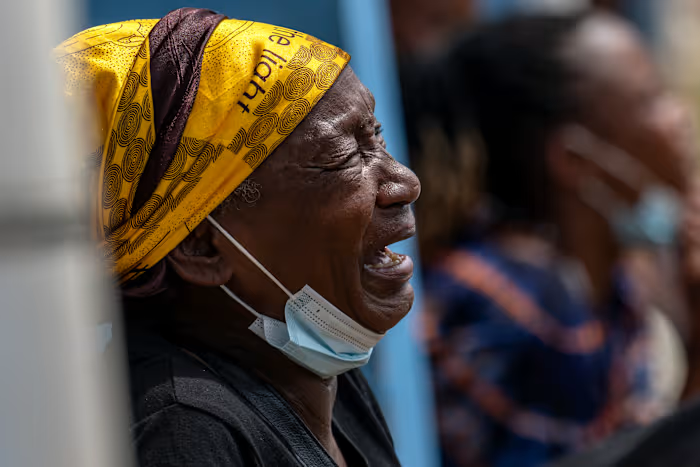
The Democratic Republic of Congo (DRC) is once again battling one of the world’s deadliest diseases—Ebola. But this time, the crisis is being made even worse by violence, misinformation, and public fear. In a shocking development, another Ebola treatment clinic has reportedly been burned down by attackers in eastern Congo as health officials struggle to contain the rapidly spreading outbreak.
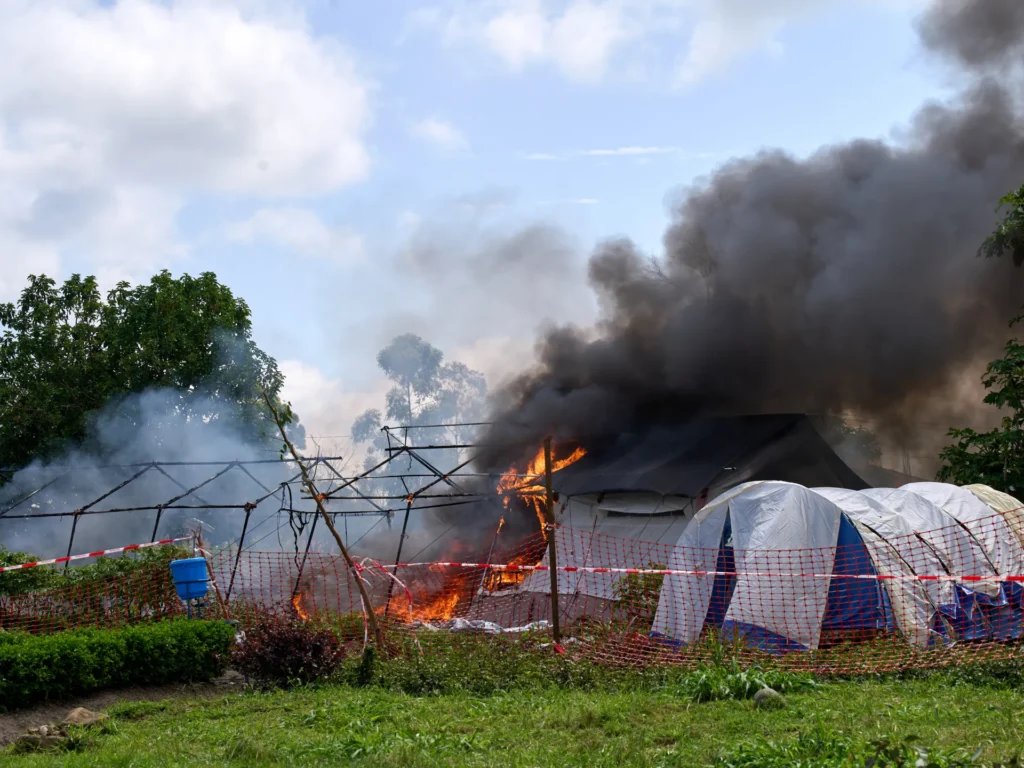
The attack highlights a dangerous reality: Ebola is no longer just a medical emergency in the region—it has become a social and security crisis too.
Another Clinic Burned Amid Rising Panic
According to recent reports, angry residents attacked and set fire to a second Ebola treatment center in eastern Congo. The latest incident occurred in Mongbwalu, where at least 18 suspected Ebola patients fled into nearby communities after the facility was destroyed.
This comes only days after another Ebola center in Rwampara was also burned down during protests linked to burial disputes and mistrust toward health authorities.
Many residents reportedly became frustrated with strict public health measures, especially restrictions around funerals and handling the bodies of Ebola victims. In some communities, people believe authorities are hiding the truth or interfering with traditional burial practices, which has fueled anger and resistance.
Unfortunately, such attacks make the outbreak even harder to control.
The Outbreak Is Growing Fast
Health officials are deeply concerned about the speed of the outbreak. The World Health Organization (WHO) has warned that Ebola cases in the DRC and neighboring Uganda are rising rapidly. WHO Director-General Tedros Adhanom Ghebreyesus recently said he is “deeply concerned” about the scale and pace of the epidemic.
The outbreak is being caused by the Bundibugyo strain of Ebola, a dangerous variant for which there is currently no approved vaccine or specific treatment.
As of this week, hundreds of suspected cases and more than 100 deaths have already been reported across eastern Congo. Some reports estimate nearly 750 suspected cases and around 177 deaths, though experts believe the real numbers may be even higher because many cases remain unreported.
The outbreak has mainly affected the Ituri and North Kivu provinces—regions already suffering from armed conflict, displacement, and weak healthcare systems.
Why This Outbreak Is Different
One reason experts are alarmed is because the virus is spreading in urban and conflict-affected areas. Cities like Goma and even Uganda’s capital Kampala have already reported confirmed cases connected to the outbreak.
That dramatically increases the risk of cross-border transmission.
Another major challenge is insecurity. Eastern Congo has long been plagued by armed militias and rebel violence, making it difficult for health workers to safely reach affected communities. Ebola responders have frequently faced threats, attacks, and mistrust from locals.
When treatment centers are attacked and patients escape, contact tracing becomes almost impossible. Every missing patient increases the possibility of new infection chains.
Misinformation Is Fueling the Crisis
One of the most dangerous elements in this outbreak is misinformation.
In many affected communities, rumors about Ebola are spreading quickly. Some people believe Ebola is fake, politically motivated, or brought intentionally by outsiders. Others distrust government officials and international health organizations because of years of conflict and instability.
This mistrust has turned some treatment centers into targets.
Experts say community cooperation is critical during Ebola outbreaks. Without public trust, people may hide sick family members, avoid hospitals, or continue traditional funeral practices that increase exposure to the virus.
Safe burial procedures are especially important because Ebola can spread through direct contact with infected bodily fluids, including during funeral rituals.
Global Health Concerns Are Rising
The WHO has already declared the outbreak a Public Health Emergency of International Concern (PHEIC), its highest alert level.
Health agencies fear the virus could spread further across Central and East Africa if containment efforts fail. Uganda has already confirmed imported cases, and neighboring countries are increasing surveillance at border crossings and airports.
International organizations are deploying emergency response teams, medical supplies, isolation units, and laboratory support. However, experts warn that funding shortages and reduced international aid are weakening the overall response.
Some global health specialists argue that recent cuts to public health programs and outbreak preparedness have left vulnerable countries less equipped to respond quickly.
Why the World Should Pay Attention
Ebola outbreaks are not new to Congo. In fact, this is the country’s 17th Ebola outbreak since 1976.
But what makes this situation especially dangerous is the combination of:
- Violent attacks on health facilities
- Public mistrust and misinformation
- Cross-border spread
- Lack of approved vaccines for the Bundibugyo strain
- Ongoing armed conflict in affected regions
Together, these factors create a perfect storm.
Health experts stress that Ebola can still be contained if rapid action is taken. Early diagnosis, isolation, supportive care, public awareness, and strong community engagement remain the most effective tools.
But unless violence against healthcare workers stops and trust is rebuilt with local communities, the outbreak could continue to spiral out of control.
The world has seen before how quickly infectious diseases can spread beyond borders. What is happening in the DRC today is not just a local tragedy—it is a global warning.
From breaking headlines to the latest digital innovations — TrendCivix brings you the stories everyone is talking about.
📰 Explore Our Top Categories:
⚡ Get real-time updates, trending stories, viral moments, and insightful blogs — all in one place.
👉 Visit now: TrendCivix
📢 Read. Explore. Stay Ahead of the Trends.