
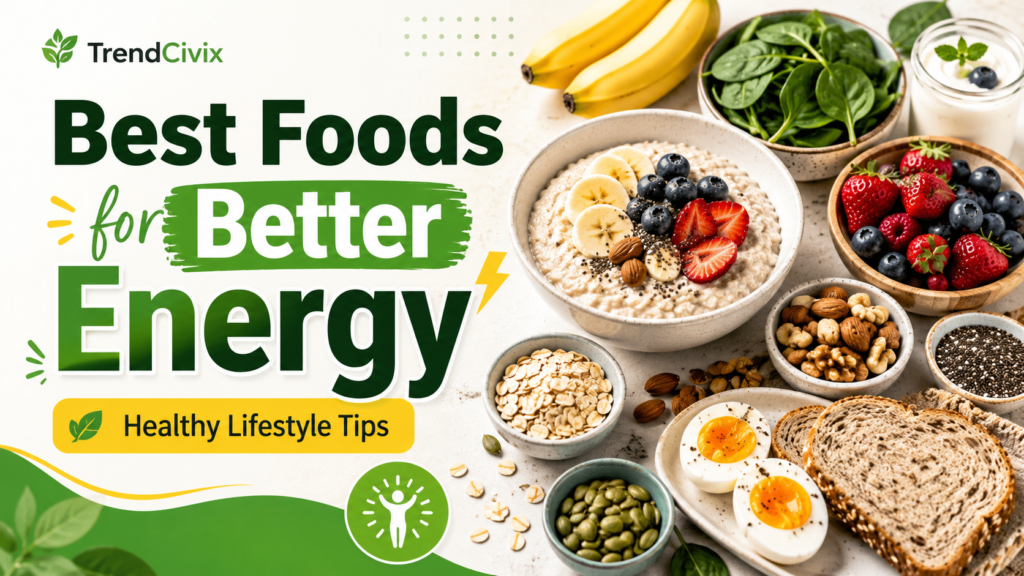

Eating the right foods can help your body stay active, focused, and balanced throughout the day. The best healthy foods for energy include whole grains, fruits, vegetables, lean proteins, nuts, seeds, beans, yogurt, and healthy fats.
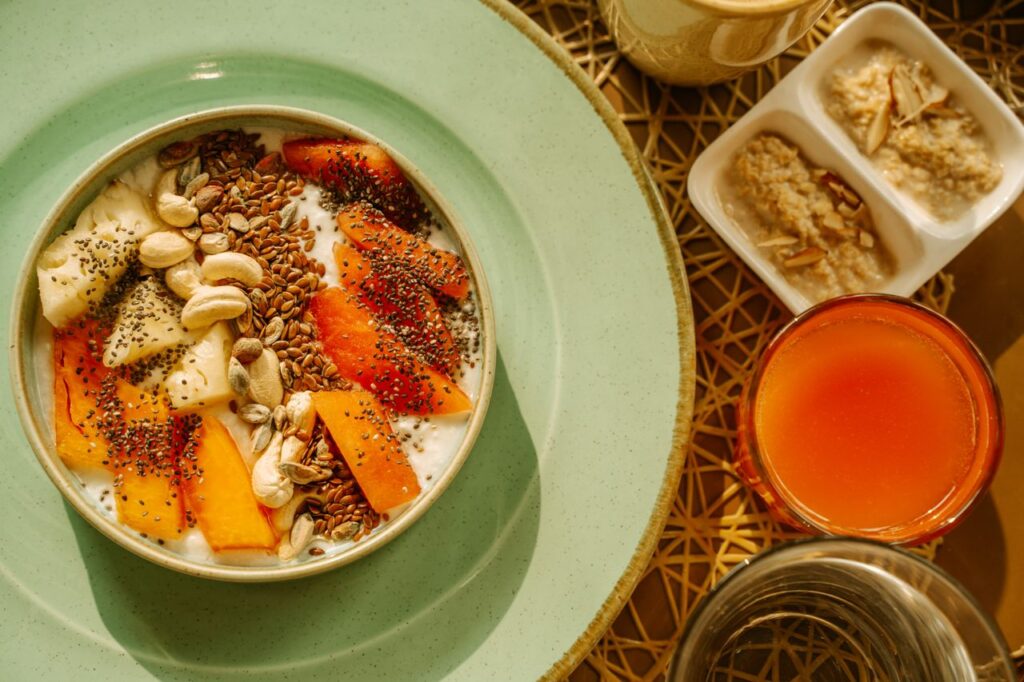
Good nutrition is not about a strict diet. It is about choosing foods that give your body energy, nutrients, and long-term health support. MedlinePlus explains that a healthy eating plan should provide energy and nutrients such as protein, carbohydrates, fats, vitamins, minerals, and water.
Quick Summary
- Whole grains like oats, brown rice, and whole wheat bread provide steady energy.
- Fruits and vegetables give vitamins, minerals, fiber, and hydration.
- Lean proteins like eggs, fish, chicken, beans, and yogurt help keep you full.
- Nuts, seeds, and healthy fats support balanced nutrition.
- Sugary drinks and highly processed snacks may give quick energy but often lead to energy crashes.
- A balanced plate is better than relying on one “superfood.”
What Happened / Main Explanation
In the United States, more people are searching for simple ways to eat better without following extreme diets. The focus is shifting toward balanced meals, real foods, and daily habits that support energy and wellness.
The CDC says healthy eating patterns are linked with longer life and lower risk of serious health problems such as heart disease, type 2 diabetes, and obesity. The CDC also notes that a healthy eating plan includes vegetables, fruits, protein foods, dairy without added sugars, healthy fats, and whole grains.
For better daily energy, the body needs the right mix of carbohydrates, protein, fats, fiber, and water. Carbohydrates are especially important because the body breaks them down into glucose, which is the main energy source for cells, tissues, and organs.
Here are some of the best foods to include in a healthy lifestyle:
1. Oats
Oats are a good breakfast choice because they contain complex carbohydrates and fiber. They can help provide steady energy in the morning.
2. Bananas
Bananas are easy to eat, affordable, and useful before workouts or busy days. They contain natural carbohydrates and important nutrients.
3. Eggs
Eggs are a simple source of protein. They can help you feel full and support a balanced breakfast or lunch.
4. Greek Yogurt
Plain Greek yogurt provides protein and can be paired with fruit, nuts, or seeds. Choose options without added sugars when possible.
5. Leafy Green Vegetables
Spinach, kale, and other greens add vitamins, minerals, and fiber to meals. They are easy to use in salads, smoothies, eggs, or cooked dishes.
6. Beans and Lentils
Beans and lentils provide plant-based protein, fiber, and carbohydrates. They are also budget-friendly and can be used in soups, rice bowls, salads, and wraps.
7. Brown Rice and Whole Grains
Whole grains are better for steady energy than many refined grain products. Examples include brown rice, quinoa, oats, whole wheat bread, and whole grain pasta.
8. Nuts and Seeds
Almonds, walnuts, chia seeds, flaxseeds, and pumpkin seeds provide healthy fats, fiber, and minerals. A small portion can be a useful snack.
9. Fish and Lean Protein
Fish, chicken, turkey, tofu, and lean meats can support muscle health and fullness. Beans, peas, soy products, nuts, and seeds are also listed by the CDC as healthful protein options.
10. Water-Rich Foods
Foods like oranges, cucumbers, berries, watermelon, and soups can support hydration. Water is also a key part of good nutrition, according to MedlinePlus.
Why This Topic Matters
Energy is a daily concern for many people in the USA. Busy work schedules, screen time, fast food habits, and poor sleep can make people feel tired. Food is not the only reason for low energy, but it is an important part of the solution.
A balanced diet can help people stay focused at work, perform better during exercise, manage hunger, and avoid overeating. It can also support long-term wellness when combined with physical activity, sleep, and regular medical care.
This topic also matters because many people look for quick fixes. Energy drinks, sugary snacks, and crash diets may seem helpful for a short time, but they are not the best foundation for daily health.
Key Details You Should Know
- Choose whole foods more often than ultra-processed foods.
- Add protein to breakfast to stay full for longer.
- Eat fruits instead of sugary snacks when possible.
- Pick whole grains instead of refined grains for more fiber.
- Drink enough water during the day.
- Keep meals simple: protein + whole grain + vegetables + healthy fat.
- Avoid making health decisions based only on viral social media trends.
- For medical conditions, always speak with a qualified healthcare professional.
Latest Update
The latest U.S. nutrition guidance continues to focus on whole, healthy, and nutritious foods. DietaryGuidelines.gov and MyPlate now highlight the new edition of the Dietary Guidelines for Americans, and MyPlate remains a key USDA resource for building balanced meals.
No further official update has been confirmed yet.
Final Thoughts
The best foods for a healthy lifestyle and better energy are simple, everyday foods. You do not need an expensive diet plan to eat better. Start with oats, fruits, vegetables, eggs, beans, yogurt, whole grains, nuts, seeds, water, and lean proteins.
Small changes can make your meals more balanced. Choose real foods more often, limit added sugars, and build a routine that fits your lifestyle, budget, and culture.
This content is for general awareness only. For medical advice, consult a qualified healthcare professional.
6. FAQs
Question: What are the best foods for energy?
Answer: Oats, bananas, eggs, yogurt, beans, lentils, whole grains, nuts, seeds, fruits, and vegetables are good foods for daily energy.
Question: What should I eat in the morning for better energy?
Answer: A balanced breakfast with oats, eggs, yogurt, fruit, whole grain toast, or nuts can help support morning energy.
Question: Are carbohydrates bad for energy?
Answer: No. Healthy carbohydrates like oats, fruits, beans, and whole grains provide glucose, which the body uses for energy.
Question: What foods should I avoid for better energy?
Answer: Try to limit sugary drinks, highly processed snacks, fried foods, and foods high in added sugar or saturated fat.