


Are you struggling with high API costs and limited context windows from proprietary AI models? Moonshot AI Kimi K3 offers a powerful, open-source solution to these modern development challenges.
By bringing a massive 2.8-trillion-parameter model directly to the public, it solves the problem of expensive enterprise AI deployments while delivering frontier-level performance. If you want to scale your complex coding tasks and data analysis without breaking the budget, this is the breakthrough you need to understand.
Quick Answer
Moonshot AI Kimi K3 is the world’s largest open-weight large language model, featuring 2.8 trillion parameters and a 1-million-token context window. Released in July 2026, it rivals top proprietary models like Anthropic’s Claude Opus 4.8 and GPT-5.5, offering advanced reasoning, long-horizon coding, and native multimodal capabilities.
What Is Moonshot AI Kimi K3?
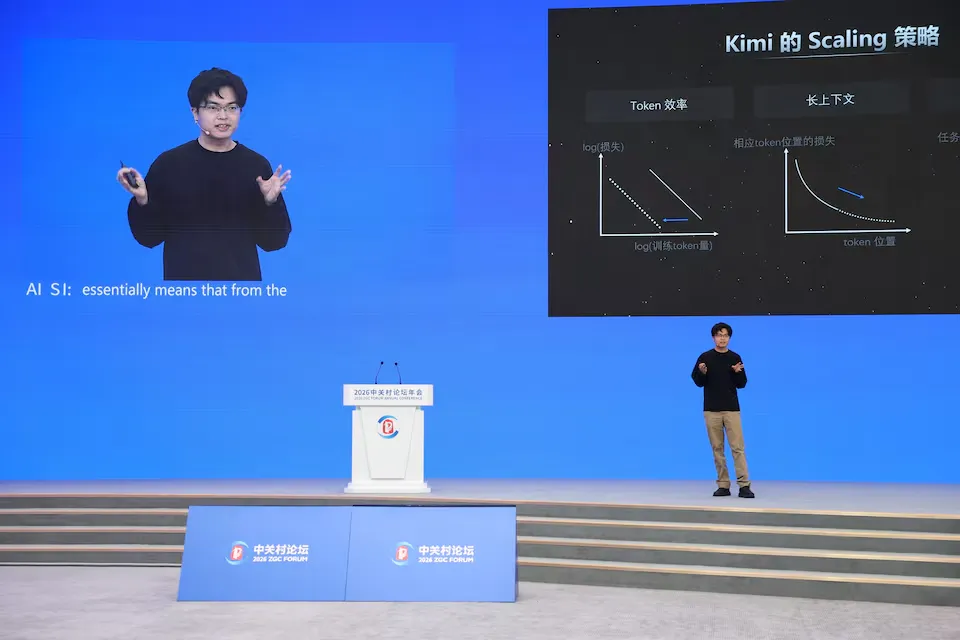
Developed by the Beijing-based tech startup Moonshot AI, Kimi K3 is a cutting-edge large language model (LLM) that recently broke records in the generative AI space. Unveiled at the 2026 World Artificial Intelligence Conference, it boasts a staggering 2.8 trillion parameters. To put that into perspective, it is nearly four times the size of previously released Chinese open models and roughly 75% larger than DeepSeek’s V4 Pro.
However, sheer size isn’t its only defining feature. The model operates on a “Mixture of Experts” (MoE) architecture. Rather than using all 2.8 trillion parameters for every single prompt, its Stable LatentMoE framework activates just a small fraction (specifically 16 out of 896 expert pathways) at a time. This makes it incredibly efficient to run, allowing developers to process highly complex tasks without requiring an unrealistic amount of computing power.
Why Moonshot AI Kimi K3 Matters
The release of this model is a watershed moment for the global tech industry for a few vital reasons:
- The Rise of Open-Weight Models: Historically, the most powerful AI systems were locked behind proprietary doors by major US labs. By making the full model weights available under a Modified MIT license on July 27, 2026, Moonshot AI allows businesses to download, modify, and run the model locally. This provides unmatched data privacy for enterprises.
- Closing the Global AI Gap: The launch challenges the previously held industry consensus that Chinese AI companies were trailing significantly behind their Western counterparts. Benchmark tests show Kimi K3 outperforming established models like GPT-5.5 in specific coding and debugging tasks, bringing fierce competition to the market.
- Enterprise Cost Reduction: Proprietary API costs can skyrocket for high-volume users. With competitive API pricing aligned with mid-tier offerings, Kimi K3 offers top-tier performance for a fraction of the cost.
Key Benefits of Moonshot AI Kimi K3
Whether you are an enterprise software architect or a tech enthusiast, Kimi K3 brings several practical benefits to the table:
- Massive Context Window: With a 1-million-token context window, you can feed the model entire codebases, long technical manuals, or dozens of financial reports in a single prompt without it “forgetting” the beginning of the conversation.
- Native Multimodal Capabilities: It doesn’t just read text; it natively understands visuals. It can analyze screenshots and diagrams to optimize frontend design, computer-aided design (CAD), and even video game development.
- Long-Horizon Coding Mastery: Unlike earlier models that required step-by-step hand-holding, Kimi K3 can sustain long engineering sessions with minimal human oversight. In testing, it independently built a functional miniature chip design pipeline over 48 hours without intervention.
- Lightning-Fast Processing: Thanks to architectural upgrades like Kimi Delta Attention (KDA) and Attention Residuals, the model processes and decodes information much faster than its predecessors, vastly reducing latency for real-time applications.
Step-by-Step Guide: How It Works and How to Access It
If you want to start leveraging Moonshot AI Kimi K3, here is a practical guide on how to integrate it into your workflow.
Step 1: Choose Your Deployment Method. Determine whether you want to use the cloud-based API or run the model locally. If you require absolute data privacy, wait for the open-weights release to host it on your own enterprise servers.
Step 2: Access the API. For immediate access, head over to Kimi.com, Kimi Work, or Kimi Code. The API is compatible with the standard OpenAI SDK, meaning if your current apps run on OpenAI’s infrastructure, you can swap in Kimi K3 with minimal code rewrites.
Step 3: Utilize Input Caching. API pricing sits at $3 per million input tokens and $15 per million output tokens. To save money, use the token caching feature. If you frequently prompt the model with the same foundational data, cached inputs drop to just $0.30 per million tokens.
Step 4: Engage the “Thinking Mode.” For complex logic and coding tasks, ensure the model’s max thinking effort mode is activated. This allows the AI to spend more time planning its response, resulting in significantly higher accuracy on multi-step problems.
Best Practices and Expert Tips
To get the most out of this massive LLM, keep these expert recommendations in mind:
- Provide Extensive Context: Don’t be afraid to utilize the 1-million-token window. The more background data, technical documentation, or historical code you provide upfront, the better the output will be.
- Leverage Visual Prompts: If you are debugging a user interface, don’t just describe the error. Upload a screenshot alongside your code. The model’s native visual understanding bridges the gap between how things look and how they are coded.
- Optimize for Decentralization: If you are operating in the Web3 or crypto space, the Modified MIT license makes this an ideal foundation for building decentralized AI agents without licensing headaches.
Common Mistakes to Avoid
- Ignoring Hardware Requirements for Local Deployment: While it is an open-weight model, 2.8 trillion parameters is still a colossal size. Do not attempt to run the full unquantized model on standard consumer hardware. Ensure your enterprise server has sufficient high-end GPUs to handle the inference.
- Skipping Prompt Engineering: A smarter model does not excuse lazy prompting. You still need to assign it a clear role, provide structured constraints, and define the exact format of the output you expect.
- Overlooking the Input Cache: If you are running long, repetitive tasks over the API and not utilizing token caching, you are effectively paying 10 times more for compute than necessary.
Future Trends or What to Expect
The release of Moonshot AI Kimi K3 signals a broader shift toward a highly competitive, open-source future in artificial intelligence. Moving forward, expect to see the democratization of “Agentic AI”-where AI systems act as autonomous agents capable of executing multi-step workflows across different software platforms.
Furthermore, this software evolution naturally complements hardware advancements. Just as we see rapid improvements in physical automation, such as the latest self-dressing robotic technology, intelligent open-source models like K3 will serve as the “brains” powering the next generation of autonomous machines. The synergy between massive open-source LLMs and robotics will likely define tech developments well into the late 2020s.
Final Thoughts
In summary, Moonshot AI Kimi K3 is more than just another chatbot; it is a 2.8-trillion-parameter powerhouse that shifts the balance of the global AI landscape. By offering proprietary-level performance in an open-source, cost-efficient package, it empowers developers and enterprises to build faster, smarter, and more securely than ever before.
Ready to integrate the latest AI trends into your business strategy? We’d love to hear how you plan to use these tools! Reach out to our team at our Contact Us page for personalized tech insights, or explore our other categories to stay ahead of the digital curve.
FAQs
1. What is the context window size of Moonshot AI Kimi K3?
Kimi K3 features a massive 1-million-token context window, allowing it to process and recall extensive documents, entire codebases, and long conversations in a single prompt.
2. How much does the Kimi K3 API cost to use?
The API is priced at $3 per million input tokens and $15 per million output tokens. However, leveraging cached input tokens drops the price significantly to just $0.30 per million tokens.
3. Is Kimi K3 an open-source model?
Yes, Kimi K3 is an open-weight model. Moonshot AI has committed to releasing the full model weights under a Modified MIT license, allowing developers to download and run it locally for commercial use.
4. How does Kimi K3 compare to Anthropic’s Claude models?
Kimi K3 performs competitively with top-tier models. While it closely trails Anthropic’s flagship Fable 5, it consistently matches or outperforms Claude Opus 4.8 and GPT-5.5, particularly in long-horizon coding and debugging tasks.
5. What is the Mixture of Experts (MoE) architecture in Kimi K3?
The model uses an MoE framework where it only activates a small portion of its total parameters (16 out of 896 experts) to process any given prompt. This allows the 2.8-trillion parameter model to remain highly efficient and fast without sacrificing accuracy.