
The race for artificial intelligence supremacy has officially hit a government-mandated speed bump. In an unprecedented move, the US government has stepped in to put a temporary checkpoint between OpenAI and the public, altering the launch strategy for its highly anticipated next-generation model.
As tech enthusiasts eagerly await the next massive leap in generative tech-much like the anticipation surrounding hardware leaps like the iPhone 18 Pro Max-the software side of Silicon Valley is facing a harsh new reality: national security now comes before rapid commercial rollouts.
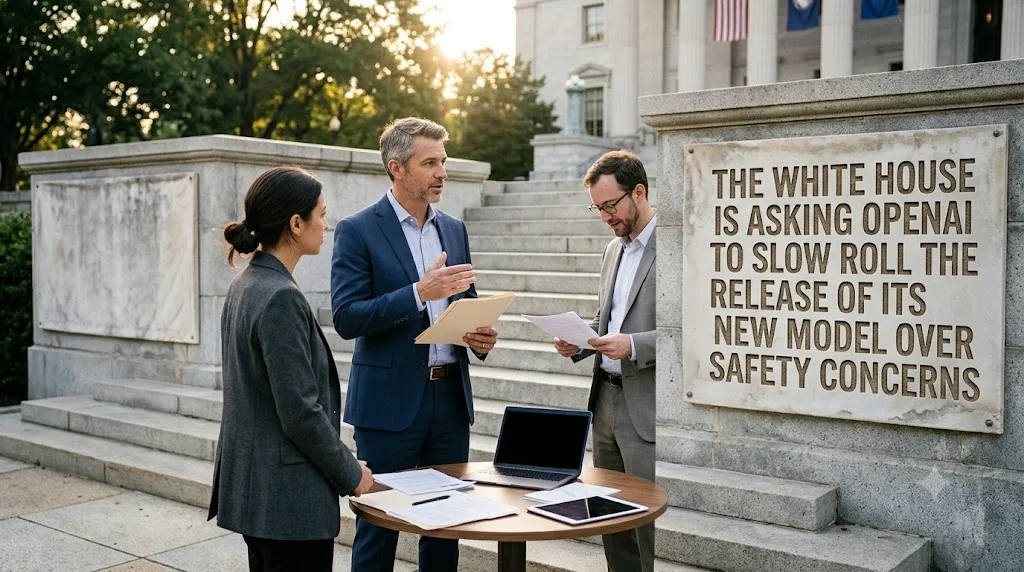
The White House has asked OpenAI to “slow roll” and stagger the release of its upcoming model, GPT-5.6, due to severe cybersecurity and national security concerns. Instead of a broad public launch, OpenAI must restrict initial access to a small group of trusted partners, with the government reviewing and approving users on a case-by-case basis.
What Is the OpenAI Slow Roll?
The term “slow roll” refers to a phased, highly restricted rollout strategy forced upon OpenAI by the Trump administration. Rather than deploying GPT-5.6 globally via its traditional API and ChatGPT interfaces overnight, OpenAI is implementing a strict, gated preview period.
According to an internal memo sent by OpenAI CEO Sam Altman, the White House—guided by the Office of the National Cyber Director and the Office of Science and Technology Policy—has mandated a customer-by-customer vetting process. Roughly two dozen vetted organizations and enterprise clients will get early access, but only after screening from multiple federal entities, including the Treasury and Commerce Departments.
Why the GPT-5.6 Release Delay Matters
This isn’t just a minor product delay for one company; it is a historic pivot in how the United States regulates frontier AI. Historically, tech companies have operated under a “move fast and break things” ethos, self-policing their safety guidelines.
This intervention signals that the era of complete autonomy for AI labs is over. The government is treating highly advanced AI models less like commercial software updates and more like tightly controlled, dual-use military exports.
For developers, startups, and enterprises building ecosystem tools on top of OpenAI’s API, this introduces a brand-new variable: regulatory uncertainty. If the most advanced models can be bottlenecked by Washington bureaucrats, tech roadmaps across the globe will have to adjust.
Key Reasons Behind the Government Intervention
Washington’s sudden urge to tap the brakes stems from specific, high-stakes anxieties:
- Autonomous Weaponization of Code: Advanced frontier models are becoming incredibly adept at finding, exploiting, and patching software vulnerabilities at machine speed. If leaked or misused, a tool of this caliber could automate devastating cyberattacks against critical infrastructure.
- The Anthropic Precedent: Just weeks prior, the US government pressured rival AI firm Anthropic into pulling its advanced models, Claude Mythos 5 and Fable 5, over similar cyber capability threats and unauthorized data extraction attempts by foreign entities.
- Foreign Intelligence Threats: Recent reports highlighted massive coordinated efforts by foreign state-affiliated actors using thousands of fraudulent accounts to scrape data and exploit advanced American LLMs.
- Lack of Guardrails: With no permanent federal agency explicitly dedicated to AI laws, the White House is using emergency requests and soft gatekeeping to prevent potential catastrophes before they happen.
How the Vetting Process Works
The rollout of GPT-5.6 will look drastically different from the launches of GPT-4 or GPT-4o. Here is how the step-by-step preview phase is structured under the current White House directive:
[OpenAI Develops GPT-5.6]
│
▼
[Voluntary Pre-Release Testing by Federal Agencies]
│
▼
[Gated Preview for Select Enterprise Partners (~24 Orgs)]
│
▼
[White House / Agency Case-by-Case Customer Vetting]
│
▼
[Phased Public Expansion (Pending Government Approval)]
If this hyper-controlled preview phase goes smoothly and the model’s defensive cyber guardrails hold up under scrutiny, OpenAI hopes to transition to a wider, public release within several weeks.
Best Practices for Businesses Building on AI
With Washington actively intervening in LLM deployment timelines, businesses must adapt to ensure continuity.
1. Build Model-Agnostic Infrastructure
Do not couple your entire business infrastructure to a single frontier model. Build your apps using wrapper code or orchestration frameworks (like LangChain) that allow you to swap backends easily if a specific model’s release is blocked or delayed.
2. Prioritize Data Security and Auditing
Government scrutiny means enterprise compliance will become tighter. Ensure your organization documents exactly how it uses AI, handles data, and prevents prompt injection vulnerabilities.
3. Keep an Eye on Open-Source Alternatives
While proprietary models from OpenAI and Anthropic face heavy regulatory checkpoints, open-source models continue to advance rapidly. Cultivate internal expertise in fine-tuning open-weight models to mitigate the risk of vendor lock-in.
Common Mistakes to Avoid in the New Regulatory Landscape

- Assuming Postponed Models are “Flops”: A delayed model doesn’t mean the technology is failing; in this case, it means the technology is so powerful that it has alarmed national security officials.
- Over-relying on Immediate API Upgrades: If your product roadmap relies on GPT-5.6 dropping broadly on day one, you are setting yourself up for disappointment. Plan around existing, stable architectures.
- Ignoring Compliance Standards: Ignoring the shifting compliance landscapes between civilian regulators (like NIST) and national security bodies (like the NSA) could leave your enterprise vulnerable to sudden operational shutdowns.
Future Trends: What to Expect Next
The current dynamic between OpenAI And The White House is admittedly improvised. However, it gives us a clear look at where the industry is headed over the next few years.
We can expect a push toward formalizing a specialized federal framework. While OpenAI favors civilian scientific oversight via the Commerce Department, the White House has shown a preference for placing national security apparatuses in charge of evaluating frontier risks.
Additionally, this friction could impact financial timelines. Amidst massive infrastructure spending and these newly enforced regulatory hurdles, rumors suggest OpenAI may delay its highly anticipated public market debut further down the road to navigate these systemic shifts.
FAQs
Why is the White House delaying OpenAI’s new model?
The Trump administration requested the delay due to cybersecurity concerns. Officials worry that the advanced capabilities of GPT-5.6 could be exploited by malicious actors to automate cyberattacks and discover software vulnerabilities at machine speed.
What is the name of the new OpenAI model being restricted?
The model facing the staggered release is GPT-5.6, OpenAI’s latest flagship frontier model.
Is the GPT-5.6 release completely canceled?
No, the release is not canceled. It has been transitioned into a gated, phased rollout. It is initially accessible only to a select group of government-approved enterprise partners before a wider release can occur.
Did other AI companies face similar government restrictions?
Yes, Anthropic was recently forced by the US government to restrict access to its advanced frontier models, Claude Mythos 5 and Fable 5, due to national security concerns regarding their cyber capabilities.
How can developers prepare for these AI rollout delays?
Developers should build model-agnostic systems, incorporate open-source alternatives into their workflows, and avoid tying critical business milestones directly to unreleased proprietary models.
Final Thoughts
The White House asking OpenAI to slow-roll GPT-5.6 marks a definitive shift from theoretical AI ethics to real-world government enforcement. While it may frustrate developers eager for the next tech breakthrough, ensuring that a hyper-capable system cannot be weaponized is a necessary precaution in an increasingly volatile digital landscape.
As the lines between tech innovation and national security continue to blur, staying informed is your best strategy. If you have questions about how these upcoming AI regulations might impact your business or tech stack, feel free to reach out to us directly via our Contact Us page to join the conversation.