

In an era dominated by rapid artificial intelligence breakthroughs and automated algorithms, finding the right balance between traditional skills and technology has become the ultimate competitive advantage for modern professionals and creators. For decades, traditional expertise-from hand craftsmanship and critical reasoning to tactile trades and fundamental problem-solving-formed the backbone of human progress. However, as advanced platforms automate daily workflows, many fear that foundational techniques might fade into obscurity.
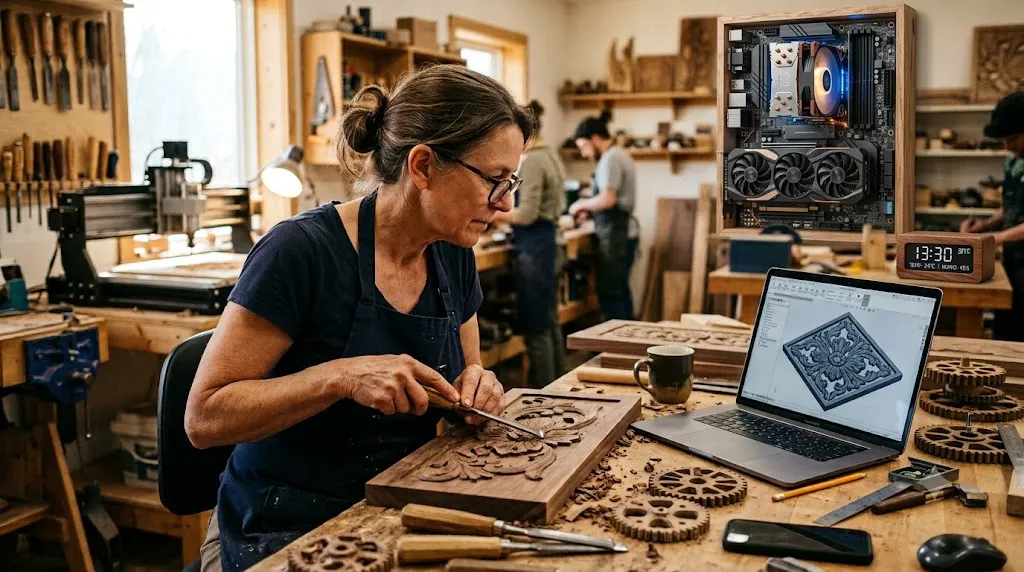
The real opportunity isn’t replacing hard-earned heritage with silicon, but rather utilizing modern technological advancements to enhance and scale human ingenuity.
Quick Answer
The interplay between traditional skills and technology involves leveraging modern tools like AI, automation, and analytics to enhance, preserve, and scale foundational human capabilities without losing tactile expertise, critical thinking, or cultural heritage. This hybrid approach increases productivity, preserves trade secrets, and ensures resilient career growth in an increasingly digital landscape.
What Is the Intersection of Traditional Skills and Technology?
The intersection of traditional skills and technology represents a strategic blend where time-tested human expertise meets high-tech innovation. Traditional skills refer to foundational trade techniques, manual craft, artistic methods, and deep cognitive critical thinking developed over generations. Technology, in this context, includes artificial intelligence, software automation, specialized digital equipment, and cloud platforms.
Rather than treating these two domains as opposing forces, modern industries view them as complementary layers:
- Heritage Mastery: Deep, intuitive understanding of materials, fundamental logic, and human-centric design principles.
- Technological Acceleration: Software, robotics, and generative AI that remove repetitive friction, analyze vast datasets, and execute tedious mechanics.
When combined, technology acts as an amplifier for traditional mastery, taking authentic human craftsmanship to broader audiences at unprecedented speeds.
Why Balancing Traditional Skills and Technology Matters Today
As tech tools grow exponentially sophisticated, reliance solely on software creates hidden vulnerabilities. Algorithms can generate code, draft articles, and produce design assets instantly, but without human oversight grounded in fundamental principles, outputs often lack nuance, empathy, and structural integrity.
[ Deep Traditional Expertise ]
+
[ Advanced Technological Tools ]
=
[ High-Value, Unique & Resilient Innovation ]
1. Preserving Quality and Authenticity
Automated systems rely on historical patterns to predict outcomes. They do not possess intuition or genuine creativity. Maintaining deep knowledge of foundational trades ensures that end products—whether software architecture, physical craft, or written media—retain high quality, context, and emotional resonance.
2. Enhancing Economic Resilience
Workers who master both foundational concepts and cutting-edge software become irreplaceable. While routine tasks are easily automated, the ability to troubleshoot complex digital system failures using traditional logical frameworks remains a high-value skill.
3. Preserving Cultural Knowledge
Many specialized heritage trades face extinction as younger generations prioritize purely digital paths. Integrating tech—such as 3D mapping, digital archiving, and AI-driven skill training—helps document and safeguard historic techniques for future generations.
Key Benefits of Integrating Technology into Traditional Trades
Blending time-tested expertise with contemporary tech offers distinct advantages across diverse industries:
- Unmatched Efficiency: Mundane prep work is eliminated by automation, allowing artisans and professionals to focus strictly on creative execution.
- Broader Global Reach: Artisans can leverage digital platforms, global logistics, and e-commerce infrastructure to sell specialized traditional crafts worldwide.
- Precision and Quality Control: High-precision tech tools reduce human error in repetitive tasks while leaving intricate customizations to expert human hands.
- Accelerated Skill Acquisition: Augmented reality (AR) and smart simulations enable apprentices to master complex manual trades faster and more safely.
- Enhanced Innovation: Combining historic approaches with modern computational power often spawns entirely new categories of design and engineering.
Step-by-Step Guide: How to Fuse Traditional Skills with Modern Technology
Successfully combining classic techniques with digital toolsets requires a structured, intentional workflow. Here is a practical roadmap to help you integrate both effectively.
+————————————————————-+
| Step 1: Audit Core Skills & Identify Manual Bottlenecks |
+————————————————————-+
|
v
+————————————————————-+
| Step 2: Select Complementary Tech Tools (AI, Software, AR) |
+————————————————————-+
|
v
+————————————————————-+
| Step 3: Standardize Hybrid Workflows & Maintain Quality |
+————————————————————-+
|
v
+————————————————————-+
| Step 4: Iteratively Test, Refine, & Protect Core Principles |
+————————————————————-+
Step 1: Audit Your Core Principles
Start by identifying the fundamental skills that drive your work’s core value. Determine which aspects demand human intuition, aesthetic judgment, or manual dexterity, and isolate mechanical tasks that slow you down.
Step 2: Select Complementary Technological Tools
Choose technologies that remove friction without compromising quality. For instance, a traditional furniture maker might use 3D CAD modeling software to visualize structural dimensions before touching raw timber with physical hand tools.
Step 3: Establish a Hybrid Workflow
Map out your process to designate clear roles for human decision-making and automated assistance:
- Ideation & Concepting: Human-led strategy grounded in experience.
- Drafting & Execution: Tech-assisted generation, rendering, or machining.
- Refinement & Finalization: Human-driven quality control, polishing, and ethical verification.
Step 4: Validate and Protect Your Authenticity
Continuously evaluate your output. If the integration of software dilutes the character or precision of your work, re-adjust your process to restore human oversight.
Best Practices and Expert Tips for Hybrid Mastery
To stay competitive in a rapidly evolving market, keep these strategic tips in mind:
Pro Tip: Never outsource your core critical thinking to automated tools. Use tech to execute routine tasks, but maintain full ownership of creative direction, ethical judgment, and final quality control.
- Master the Fundamentals First: Learn the core logic, mechanics, or principles of your field manually before relying heavily on software shortcuts.
- Treat AI as an Assistant, Not a Replacement: View generative technology as a junior collaborator that builds initial drafts, leaving you free to direct and refine.
- Invest in Continuous Upskilling: Stay current with emerging software tools while continuing to sharpen your foundational trade knowledge.
- Document Traditional Knowledge Digitally: Store trade secrets, physical techniques, and custom methodologies in organized digital databases to streamline team onboarding.
Common Mistakes to Avoid
When navigating the interplay between traditional skills and technology, avoid these common pitfalls:
| Mistake | Potential Impact | How to Avoid It |
| Over-Reliance on Automation | Loss of fundamental problem-solving abilities when systems fail. | Perform regular manual checks and practice core skills without tech aids. |
| Resisting Digital Tools | Falling behind industry standards and losing competitive speed. | Adopt user-friendly digital tools that streamline administrative tasks. |
| Ignoring Quality Oversight | Producing generic, low-value outputs that lack artistic depth. | Implement strict human review checkpoints before final distribution. |
| Abandoning Heritage Methods | Losing unique brand identity and authentic craftsmanship value. | Market the human element of your work as a premium differentiator. |
Future Trends: What to Expect in the Human-Tech Era
As technologies like artificial intelligence, robotics, and immersive media mature, the value assigned to authentic human oversight will rise dramatically.
- Hyper-Personalized Craftsmanship: Consumers will increasingly favor products and services that combine algorithmic precision with verified human artistry.
- Smart Apprenticeships: Spatial computing and interactive AI mentors will revolutionize vocational education, helping students master physical trades faster.
- Verified Human-Made Certifications: As synthetic content saturates digital channels, certified human-driven craftsmanship will command premium value.
- AI-Augmented Heritage Preservation: Historical restorations will increasingly rely on generative algorithms to reconstruct missing artifacts based on traditional blueprints.
Following major industry developments-such as high-profile legal standards and tech compliance frameworks recently discussed in our article covering the Anthropic $1.5B Settlement Approved-it is clear that responsible tech deployment and human ownership are central to the future of digital and traditional industries alike.
Final Thoughts
The synergy between traditional skills and technology isn’t about choosing one over the other—it is about leveraging both to create work that is faster, smarter, and deeply authentic. By combining the speed and scale of modern tech platforms with the irreplaceable depth of human skill, you unlock sustainable long-term success across any domain.
Looking to refine your platform’s digital strategy or explore collaborative opportunities? Learn more about our team or reach out directly through our Contact Us page to stay updated with the latest insights at TrendCivix.
FAQs
What is the relationship between traditional skills and technology?
The relationship between traditional skills and technology is collaborative. Technology serves as an amplifier that speeds up repetitive processes and expands distribution, while traditional skills provide the foundational logic, intuition, quality control, and human judgment needed to guide digital tools effectively.
Can technology completely replace traditional skills?
No, technology cannot fully replace traditional skills. While software and artificial intelligence can automate routine tasks, complex critical thinking, emotional intelligence, ethical reasoning, and high-level manual craftsmanship still require human expertise and foundational knowledge.
Why are traditional skills still relevant in the age of AI?
Traditional skills remain vital because they provide the core principles needed to evaluate, correct, and improve tech-generated outputs. Without deep foundational understanding, professionals cannot effectively spot errors, maintain quality standards, or deliver authentic, original work.
How can traditional businesses integrate modern technology?
Traditional businesses can integrate technology by identifying administrative and mechanical bottlenecks, adopting targeted digital tools (like CRM systems, CAD software, or AI assistants), standardizing hybrid workflows, and training staff while preserving their core craftsmanship.
Which industries benefit most from blending technology with traditional skills?
Industries such as manufacturing, architecture, content creation, healthcare, agriculture, and fine arts benefit significantly. Blending traditional trade techniques with advanced tech tools enhances precision, speeds up production, and preserves valuable domain knowledge.