


The Anthropic $1.5B settlement approved decision marks a monumental shift in how tech giants train generative AI models using copyrighted material. With artificial intelligence expanding at an unprecedented rate, the legal boundaries surrounding intellectual property, data scraping, and fair use are finally being tested in federal courtrooms.
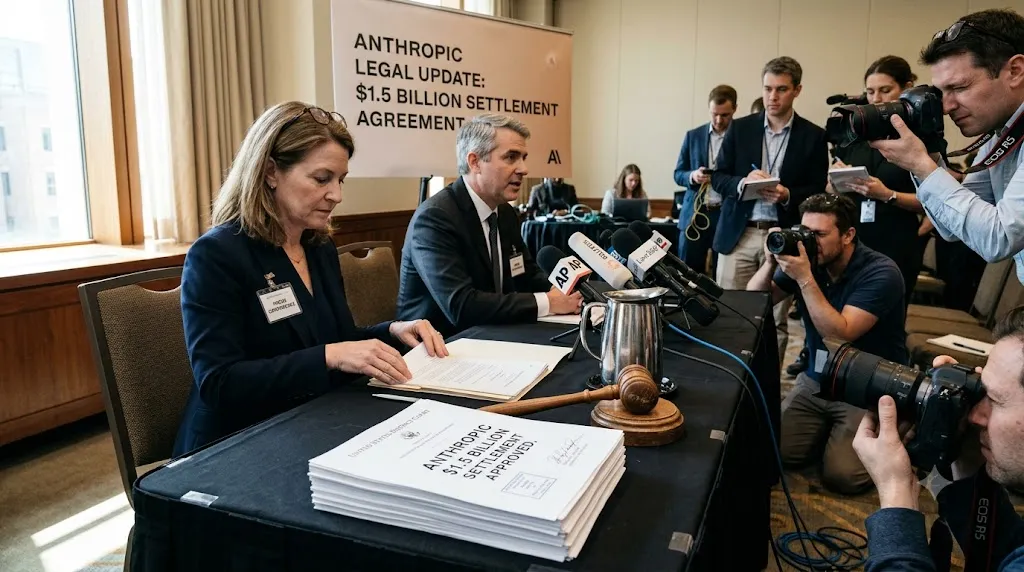
Understanding this historic legal deal is essential for creators, developers, and tech enthusiasts navigating the evolving AI landscape.
Quick Answer
The Anthropic $1.5B settlement approved agreement establishes a critical precedent for artificial intelligence developers and copyright holders. By settling high-stakes copyright litigation for $1.5 billion, Anthropic resolves claims over unauthorized training data usage while setting new industry benchmarks for compliance, fair compensation, and ethical AI development across the tech sector.
What Is the Anthropic $1.5B Settlement?
The legal resolution surrounding the Anthropic $1.5B settlement approved ruling represents one of the largest copyright disputes in artificial intelligence history. Anthropic—the AI research safety company behind the Claude family of Large Language Models (LLMs)—faced extensive litigation from authors, publishers, and media organizations regarding the unauthorized use of copyrighted works in AI training datasets.
Instead of fighting through years of uncertain trial proceedings, Anthropic agreed to a structured legal payout valued at $1.5 billion. This groundbreaking agreement aims to resolve active claims while providing a clear legal framework for how generative AI companies can ethically source published content moving forward.
Why the Anthropic Settlement Matters to the AI Industry
The approval of this $1.5 billion deal signals a clear end to the “wild west” era of web scraping for AI model training. For years, tech platforms operated under broad interpretations of fair use, scraping public and semi-private web content to train massive neural networks.
Here is why this case represents a turning point:
- Legal Certainty: It creates an actionable blueprint for resolving copyright claims without shutting down core AI platforms.
- Financial Valuation of Data: It places a concrete dollar value on high-quality text and creative content used as training inputs.
- Market Stability: Investors and enterprise clients gain confidence knowing that AI leaders like Anthropic are clearing away legal liabilities.
Just as the industry watched hardware suppliers reach record valuations—as highlighted in our coverage on ASML’s trillion-dollar trajectory—software developers are discovering that long-term enterprise growth requires solid regulatory and legal foundations.
Key Benefits of the $1.5 Billion Anthropic Agreement
The court-approved settlement offers distinct advantages for both the tech ecosystem and content creators:
- Structured Compensation for Creators: Eligible authors and publishers receive direct financial remuneration for their contribution to AI training datasets.
- Clear Compliance Guidelines: Anthropic gains explicit legal clearance to operate its generative AI products without fear of emergency injunctions.
- Standardized Licensing Pathways: The agreement encourages standard licensing models between media organizations and AI developers.
- Enhanced AI Safety Standards: Fostering legal transparency pushes companies to implement better governance and data lineage tracking.
How AI Copyright Compliance Works Step-by-Step
To prevent future multivariable lawsuits, AI organizations are adopting strict content ingestion frameworks. Here is how modern AI training compliance works in practice:
- Data Auditing and Lineage Tracking: Engineering teams audit huge text datasets to catalog copyrighted assets, licensed materials, and open-source information.
- Opt-Out & Licensing Integration: Developers implement technical protocols allowing rightsholders to opt out or negotiate commercial licensing deals.
- Synthetic Data Generation: Models increasingly rely on synthetic (AI-generated) datasets to reduce dependence on protected human-created content.
- Legal Clearance and Compensation Pools: Settlement funds and escrow accounts are established to disburse fair compensation to affected content owners.
Best Practices and Expert Tips for Tech & Media Professionals
Whether you are a developer building LLM applications or a publisher protecting original works, consider these actionable insights:
- Audit Your Data Pipeline: If building proprietary models, verify that training sources carry explicit commercial licenses.
- Leverage Robots.txt and AI Exclusion Tags: Publishers should actively manage site crawl permissions to control how automated bots digest content.
- Diversify Revenue Models: Digital media networks should explore direct licensing partnerships with generative AI vendors.
- Stay Proactive on AI Governance: Keep track of legal precedents to adapt organizational risk management strategies early.
Common Mistakes to Avoid in the AI Law Era
Navigating artificial intelligence regulations requires caution. Avoid these frequent pitfalls:
- Assuming All Public Content Is Free to Scrap: Public visibility does not negate copyright protection or terms-of-service restrictions.
- Ignoring Licensing Agreements: Relying solely on fair use defenses in high-stakes commercial software deployment creates massive liability.
- Neglecting Attribution Tracking: Failing to maintain internal records of training sources makes legal defense nearly impossible during audits.
Future Trends: What to Expect Next in Generative AI Law
The Anthropic $1.5B settlement decision is just the beginning of a larger global legal transformation.
| Trend | Expected Impact | Timeline |
| Standardized AI Licensing | Automated royalty clearinghouses for digital writers and publishers. | 1–2 Years |
| Legislative AI Frameworks | Formal statutory laws defining fair training uses across the US and EU. | 2–3 Years |
| Watermarking & Provenance | Cryptographic tracking of original vs. AI-generated text and media. | Immediate |
Final Thoughts
The decision behind the Anthropic $1.5B settlement provides much-needed legal clarity for the artificial intelligence sector. By balancing fair compensation for creative rights with room for technical innovation, the tech industry moves one step closer to a sustainable, ethical AI framework.
Have questions about how emerging AI laws impact your digital platform, or want to discuss digital trends? Reach out to our team directly through our Contact Us page or explore more tech insights across TrendCivix!
FAQs
What is the Anthropic $1.5B settlement?
The Anthropic $1.5B settlement is a landmark court-approved agreement in which the AI firm agreed to pay $1.5B to resolve copyright infringement claims related to training its Claude AI models on copyrighted works.
Why was Anthropic sued by content creators?
Anthropic was sued for using copyrighted books, articles, and other published works without permission or payment of commercial licensing fees to train its generative language models.
How does this settlement affect the generative AI industry?
It sets a legal precedent encouraging AI developers to establish commercial licensing agreements and data transparency standards rather than relying solely on fair use claims.
Does the settlement mean AI companies cannot scrape public data?
No, but it establishes that scraping copyrighted material without permission carries significant legal risk, driving the industry toward licensed data feeds and synthetic data alternatives.
Will authors and publishers receive payout from the settlement?
Yes, the settlement fund provides structured compensation pathways for qualifying authors, publishers, and rightsholders whose works were identified in Anthropic’s training datasets.