
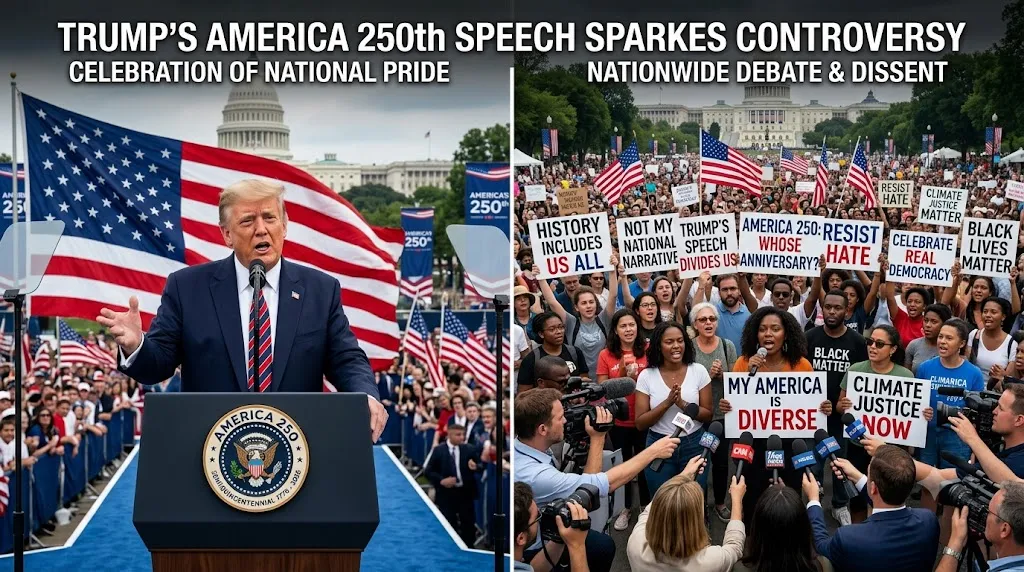
The United States reached an extraordinary milestone: its Semiquincentennial, or 250th anniversary of independence. While an anniversary of this magnitude is traditionally a moment for unified national pride, the political climate has turned it into a battleground of ideas. At the center of this storm is the Trump America 250th anniversary speech controversy.
For months leading up to the celebration, plans for the milestone sparked intense discussion. Following high-stakes legal and political dramas-such as the intense debates analyzed in our look back at the Trump v. Anderson Supreme Court oral arguments-the narrative surrounding the nation’s 250th birthday has become deeply polarized. The speech delivered for the occasion did not just mark a historic date; it ignited a fierce nationwide debate over America’s past, present, and future direction.
What is the Trump America 250th anniversary speech controversy?
The Trump America 250th anniversary speech controversy stems from a polarizing Semiquincentennial address that prioritized a traditional, “Great Awakening” patriotic education curriculum and anti-globalist policies. Supporters praised its focus on American exceptionalism, while critics argued the speech weaponized a historic milestone for partisan campaigning, sidelining a more inclusive reflection on modern American history.
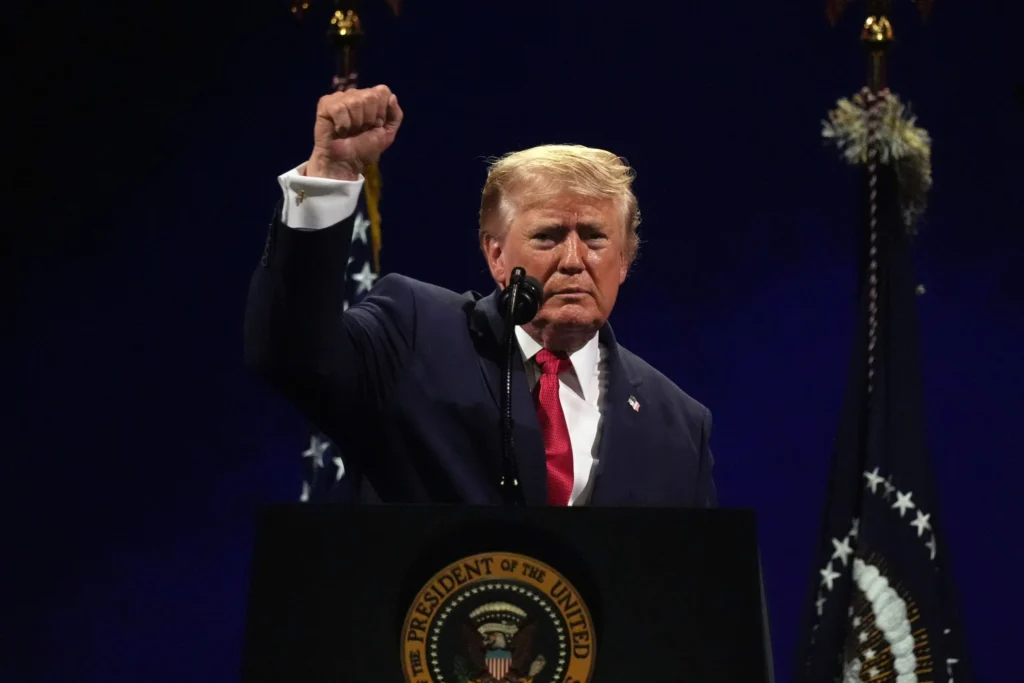
What Is the Trump America 250th Anniversary Speech Controversy?
To understand the core of this issue, one must look at how the Semiquincentennial was framed. The controversy centers on the official address given to mark 250 years since the signing of the Declaration of Independence. Instead of a conventional, bipartisan tribute to unity, the address leaned heavily into a populist, nationalist ideological framework.
The speech focused intensely on:
- A return to strict constitutional originalism.
- The implementation of a nationwide, patriotic-focused school curriculum (drawing from the earlier “1776 Commission” concepts).
- A strong critique of modern progressive cultural shifts, labeling them as threats to the foundational American fabric.
The resulting clash created two distinct narratives. One side viewed it as a necessary defense of core American values, while the other saw it as an inappropriate use of a unifying national holiday to advance a specific political platform.
Why the America 250 Speech Controversy Matters
This controversy matters because it highlights a deeper cultural rift regarding the American identity. A 250th anniversary happens only once, offering a rare opportunity to define the country’s trajectory for the next generation.
When a milestone of this scale becomes deeply partisan, it signals that the consensus on what America stands for is shifting. For voters, historians, and international observers, the debate is an indicator of how the country intends to balance its historical legacy with its evolving demographic and cultural reality. Furthermore, it sets the tone for future legislative pushes regarding education, immigration, and civic engagement.
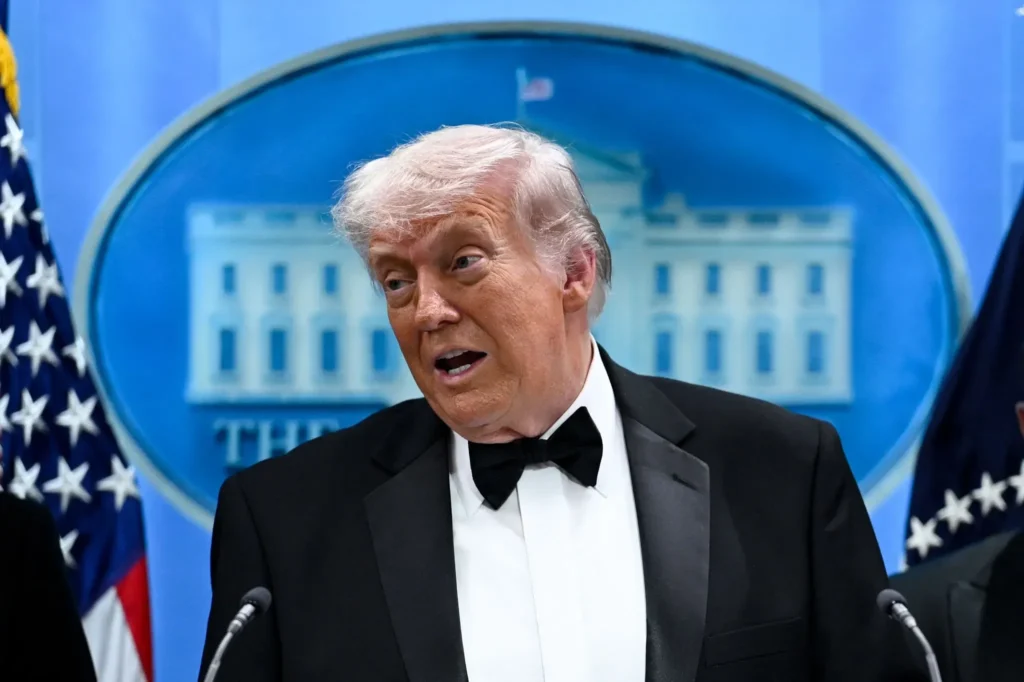
Key Points of Contention in the Speech
The public reaction to the address highlighted several distinct arguments from both sides of the political spectrum.
- The Patriotic Education Mandate: The speech explicitly called for replacing progressive historical frameworks with curriculum focused strictly on American triumphs.
- Bipartisan vs. Partisan Framing: Traditionalists argued the setting demanded a neutral tone, whereas the delivered speech mirrored a campaign rally atmosphere.
- Historical Inclusion: Critics noted the speech glossed over systemic civil rights struggles, while proponents argued that focusing on flaws diminishes national pride.
- The “America First” Global Stance: Reaffirming isolationist foreign policies during a global celebration drew sharp criticism from international allies and domestic foreign policy experts alike.
How the Controversy Unfolded: A Step-by-Step Breakdown
Understanding how the Trump America 250th anniversary speech controversy reached a boiling point requires looking at the sequence of events surrounding the celebration.
1. The Pre-Event Strategic Build-Up
Years prior to 2026, initial proposals were laid out to host a massive “Great American State Fair” and construct a vast monument park. As these plans evolved, the messaging shifted from a decentralized state celebration to a centralized showcase of a specific political vision, setting expectations high and raising early alarms among political opponents.
2. The Delivery of the Address
On the Fourth of July, the address was delivered with high-energy rhetoric. Rather than focusing solely on the founding fathers, the speech actively targeted contemporary political rivals, bureaucratic institutions, and media outlets, instantly shifting public focus from historical reflection to current political combat.
3. Immediate Media Polarization
Within minutes of the conclusion, the media landscape fractured. Conservative networks hailed the speech as a masterclass in American patriotism and a bold defense of liberty. Concurrently, center and left-leaning outlets condemned it as divisive, nationalistic rhetoric that alienated more than half of the country during a moment meant for solidarity.
4. Grassroots and Legislative Fallout
Following the speech, several governors aligned with the rhetoric began pushing for state-level educational overhauls to match the speech’s call to action. Opposing states released joint statements reaffirming their commitment to diverse historical education, ensuring the speech’s impact will be felt in local policy for years.
Best Practices for Navigating Political Media Coverage
In an era dominated by generative AI and algorithmic news feeds, consuming news objectively can be challenging. Use these expert tips to filter through the noise surrounding major political events:
- Read the Original Source Document: Before reading opinion pieces, read or watch the full transcript of the speech to understand the context of the quotes being debated.
- Cross-Reference Multiple Outlets: Check how the event is covered by domestic conservative, liberal, and independent international news organizations.
- Separate Policy from Rhetoric: Distinguish between actionable legislative proposals mentioned in the speech and emotional, rally-style rhetoric.
- Monitor Local Legislative Impacts: Pay attention to how your specific school board or state legislature reacts to these national conversations, as this is where the real-world application occurs.
Common Mistakes to Avoid When Analyzing Political News
- Relying Solely on Social Media Snippets: Out-of-context video clips on TikTok or X (formerly Twitter) frequently distort the true intent of a speaker’s message.
- Echo-Chamber Confirmation: Avoid reading only analysis that aligns with your preexisting political views. Seeking out opposing arguments builds a more balanced understanding.
- Confusing Commentary with Reporting: Be aware of the difference between a straight news report detailing what was said versus an op-ed explaining how you should feel about it.
Future Trends: What to Expect Leading Beyond the Semiquincentennial
The ripples of the Trump America 250th anniversary speech controversy will extend far beyond the summer celebrations. We can expect this address to serve as a foundational blueprint for upcoming electoral cycles.
The focus on rewriting educational standards will likely intensify, making local school board elections major political battlegrounds. Additionally, the debate over how America presents itself to the world will influence trade and foreign policy discussions, as the “America First” rhetoric utilized during the speech solidifies itself as a core policy mandate rather than just a holiday sentiment.
FAQs
What was the main theme of the Trump America 250th anniversary speech?
The main theme centered on a resurgence of American exceptionalism, the implementation of patriotic education frameworks, a critique of progressive cultural shifts, and a reaffirmation of nationalist “America First” policies.
Why did critics call the Semiquincentennial address controversial?
Critics argued that the speech used a historic, traditionally non-partisan national milestone to deliver a polarizing, campaign-style address that attacked political opponents and overlooked systemic historical struggles.
How did supporters defend the 250th anniversary speech?
Supporters praised the address for its unapologetic patriotism, its defense of traditional American values, and its clear stance against what they view as historical revisionism taught in modern schools.
What policy changes were proposed during the address?
The speech called for sweeping overhauls in public school history curricula, a return to strict constitutional originalism, and the protection of national sovereignty through stricter border and trade policies.
Where can I find balanced updates on American political controversies?
You can follow comprehensive analytical breakdowns on independent news platforms, political science journals, and multi-niche commentary sites like TrendCivix.
Final Thoughts
The debate surrounding the Semiquincentennial address proves that history is not just a collection of past dates, but a living, breathing argument about our present values. Whether viewed as a necessary resurgence of unapologetic patriotism or a divisive take on a sacred national milestone, the speech has undeniably altered the cultural landscape.
As we continue to watch these political dynamics play out in real-time, staying informed with balanced analysis is vital. We want to hear your thoughts on how this milestone was marked. If you have insights, questions, or press inquiries regarding our political coverage, feel free to visit our TrendCivix Contact Page to get in touch with our editorial team.